Home Blog Page 7

Release Details Of N9.4billion Allocated To Digital Switchover Stakeholders, Anti-graft Group Tells Lai Mohammed

0

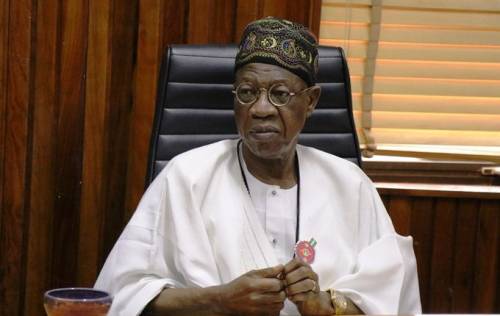
An anti-corruption coalition, Civil Society Network Against Corruption (CSNAC) has the Minister of Information and Culture, Alhaji Lai Mohammed to release details of expenditure on payment to key Digital Switchover (DSO) stakeholders.

The Federal Government had paid a whopping N9.4 billion to the stakeholders.


In a letter addressed to the Minister last week, the anti-graft coalition asked the Minister to tell the public how the N9.4 billion released to the stakeholders was spent.

The letter with the caption “Request for information on the N9.4 billion approved by the Federal Executive Council (FEC) Pursuant to the Freedom of Information Act (FOI ACT 2011),” was sent to the Minister last Monday. 

In March 2021, during the unveiling of a 13–member Ministerial Task Force on Digital Switchover (DSO), Mohammed announced that the Federal Executive Council (FEC) approved the sum of N9.4 billion as outstanding payment to key DSO stakeholders.

CSNAC, in the letter signed by its Chairman, Mr Olanrewaju Suraju said the Minister is under obligation to make public how the funds were expended.

The request by CSNAC was hinged on the legal framework of the Freedom of Information (FOI) Act 2021 which mandates public access to vital information.

CSNAC has 140 affiliate members spread across Nigeria, representing the country’s most formidable anti-corruption network and by far one of the most influential in Africa.

“Nigerians have the right to know how the funds were spent. We are making the request in the overall public interest and in line with transparency and accountability in public administration,” Suraju said in the letter addressed to the Minister.

There is controversy surrounding the expenditure with allegations that N2.5 billion out of the amount was given as a seed grant to a private company, leading to the suspension and arraignment of a former Director-General of the National Broadcasting Commission (NBC).

The coalition said it was making the request in line with Sections 2, 3 and 4 of the FOI Act, 2011.

“We have given you seven days to respond to the request. This is necessary for the information ministry to avoid necessary charges in the court of law,” Suraju added.

The Dangers Of Using VPNs

0

On Friday, the Nigerian government announced the indefinite suspension of Twitter’s operations in Nigeria.

This was after the micro-blogging site deleted genocidal tweets from the President, Muhammadu Buhari, on the Biafran War of 1967-1970, wherein many lives were lost.


In a statement, Lai Mohammed, Minister of Information, said the government was forced to act because of “the persistent use of the platform for activities that are capable of undermining Nigeria’s corporate existence.”

A check by SaharaReporters in the early hours of Saturday showed that the platform is no more active within Nigeria except for those using Virtual Private Network (VPN).

VPN is a connection that allows users to establish a protected network connection when using public networks.

It is essential in helping users to protect their internet traffic and keep their identities private online.

By connecting to a secured VPN server, for instance, your internet traffic goes through an encrypted tunnel that nobody can see into, including hackers, governments, and your internet service provider.

One of the benefits of using a VPN is that it changes your IP address. This implies that with a new IP address — which can be that of any country of your choice — you can use Twitter as if you’re in your selected country without restriction.

However, there are some dangers associated with the app as listed below;

Choosing the wrong VPN: One of the dangers of using a VPN is choosing the wrong one.

Free services that advertise on browser extension stores and mobile marketplaces are notorious for claiming fast downloads and anonymized activities when in reality, they can be more dangerous than not using a VPN at all.

All devices aren’t automatically protected – If you use VPN software to protect your PC or smartphone, that’s the only device that gets protected.

To keep data safe, you must install an app on every device that connects to the internet (or else use a VPN router).

Viruses and malware are still a threat – Most VPNs do not protect your computer from viruses or malware.

You’ll still need to be mindful of downloading suspicious files, primarily through torrent and P2P networks.

Speed issues: VPN will often slow your connection speed by 10-25% depending on the service, all thanks to encryption overhead.

This can be frustrating if you frequently stream HD movies or do a lot of online gaming.

Fake VPN scams: In an ironic twist, many online hackers rely on scamming those working the hardest to avoid scams. This means that consumers should be wary of free anti-virus installers, fake ‘alert’ pop-ups, and, yes, VPN software. In the worst case, however, they also sell or supply data to government authorities. Even if the provider promises not to sell the data, it is already a risk that the data is stored at all.

Nigerians Now Charged Compulsory N6.98 For USSD Transactions, Citizens Kick

0

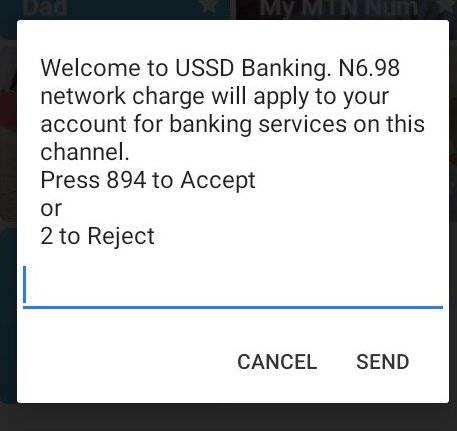
Many customers of USSD services in Nigeria on Friday have said a pop-up message has notified them of the new N6.98 charges for each transaction.

USSD is a critical channel for delivering financial services, especially for those who do not have access to physical banking infrastructure or internet services.


“Welcome to USSD Banking,” one notice said. “Please note, a N6.98 network charge will be applied to your account for banking services on this channel.”

The decision to charge users was reached in March by the Central Bank of Nigeria (CBN) and the Nigerian Communications Commission (NCC), Channels reported.

The decision was part of an agreement reached with deposit money banks following a disagreement between banks and telecom firms over USSD and other text message transaction requests.

“Effective March 16, 2021, USSD services for financial transactions conducted at DMBs (Deposit Money Banks) and all CBN-licensed institutions will be charged at a flat fee of N6.98 per transaction,” a March statement signed by the CBN and NCC partly read.

The charge is expected to be withdrawn from users’ bank accounts and remitted to mobile network operators, who provide infrastructure for the service to operate.

“The general public is reminded that the USSD channel is optional, as several alternative channels such as mobile apps, internet banking and ATMs may be used for financial transactions,” the CBN and NCC said in its joint statement in March.

“The CBN and NCC shall continue to engage relevant operators and all stakeholders to promote cheaper, seamless access to mobile and financial services for all Nigerians.”

Many Nigerians took to Twitter early Friday to express their dismay over the charges.

There are concerns about how the new charge will affect financial inclusion, particularly for people who do not have access to internet services.

Below are some of the reactions:

SERAP Gives Buhari Government 48 Hours To Withdraw Directive Asking Nigerians For Phone IMEI Numbers

0

The Socio-Economic Rights and Accountability Project has urged President Muhammadu Buhari to order the Nigerian Communications Commission to withdraw the directive asking Nigerians to submit the International Mobile Equipment Identity (IMEI) of their phones.

The Nigerian Communications Commission had stated that Nigerians would have to submit the International Mobile Equipment Identity of their phones to it from July.


In reaction, SERAP stated that the directive should be withdrawn, noting that it cannot be justified under any circumstance.

The group said the NCC’s directive amounts to mass surveillance, which is contrary to the 1999 Constitution and would have a profound impact on other human rights.

A tweet from SERAP read, “We urge President Buhari to direct the Nigerian Communications Commission to immediately withdraw the illegal directive asking Nigerians to submit the International Mobile Equipment Identity of their phones.

“We’ll see in court if this is not withdrawn within 48 hours.

“The directive cannot be justified under any circumstances, as it amounts to mass surveillance, which is contrary to the Nigerian Constitution of 1999 [as amended], and violates the rights to privacy, freedom of expression, and would have a profound impact on other human rights.”


The regulatory body had made the directive in the commission’s Revised National Identity Policy for SIM Card Registration.

This is part of NCC’s move to start the implementation of the Device Management System (a Centralised Equipment Identity Register) backed by President Muhammadu Buhari, according to Punch. 

A portion of the policy said, “Accordingly, His Excellency, President Muhammadu Buhari, GCFR, has directed that the Device Management System should be implemented within three months.”

The NCC said, “With the aim to curtail the counterfeit mobile phone market, discourage mobile phone theft, enhance National Security, protect consumer interest, increase revenue generation for the government, reduce the rate of kidnapping, mitigate the use of stolen phones for crime, and facilitate blocking or tracing of stolen mobile phones and other smart devices, one of the means to achieve this is through the deployment of Device Management System.

“The implementation of a Centralised Equipment Identity Register otherwise known as Device Management System will serve as a repository for keeping records of all registered mobile phones’ International Mobile Equipment Identity and owners of such devices.

“IMEIs that have been reported as either stolen or illegal will be shared through the DMS to all the operators and service providers.”

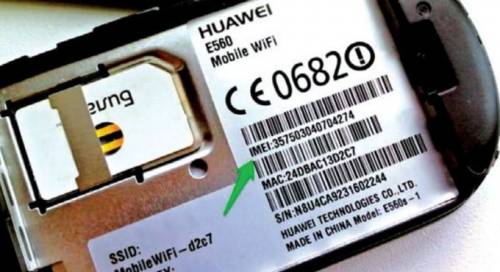
The IMEI number is the mobile phone’s fingerprint. It is a 15-digit number unique to each phone. With the IMEI number, a phone can be tracked and located irrespective of the cellular number in it.

‘We Would Rather Trek To Togo, Others Than Submit Our Phones’ IMEI Numbers To Pantami’ —Nigerians Vow

0

Nigerians have vowed not to release their International Mobile Equipment Identity (IMEI) of their mobile phones to the Nigerian Communications Commission (NCC), if Isa Pantami remains the Minister of Communications and Digital Economy.

The defiance expressed by many Nigerians followed reports on Friday morning that the NCC said Nigerians would have to submit the IMEI of their phones to the commission from July.


The regulatory body stated this in the commission’s Revised National Identity Policy for SIM Card Registration.

This is part of NCC’s move to start the implementation of the Device Management System (a Centralised Equipment Identity Register) backed by President Muhammadu Buhari, according to Punch.

A part of the policy said, “Accordingly, His Excellency, President Muhammadu Buhari, GCFR, has directed that the Device Management System should be implemented within three months.”

The NCC said, “With the aim to curtail the counterfeit mobile phone market, discourage mobile phone theft, enhance National Security, protect consumer interest, increase revenue generation for the government, reduce the rate of kidnapping, mitigate the use of stolen phones for crime and facilitate blocking or tracing of stolen mobile phones and other smart devices, one of the means to achieve this is through the deployment of Device Management System.


“The implementation of a Centralised Equipment Identity Register otherwise known as Device Management System will serve as a repository for keeping records of all registered mobile phones’ International Mobile Equipment Identity and owners of such devices.

“IMEIs that have been reported as either stolen or illegal will be shared through the DMS to all the operators and service providers.”

However, the policy has been greeted with public criticism with many Nigerians saying the President Muhammadu Buhari-led administration with the aid of Pantami, who had openly expressed sympathy for terrorist groups, is up to something fishy against the masses, especially in the South.

While some said they would rather relocate to neighbouring countries than submit their IMEI, a lot of people insisted the Nigerian government has an evil agenda for attempting to strip them off their privacy.

For instance, Elder Seun (@iamseunalaofin) tweeted, “We did NIN (National Identification Number), we did BVN (Bank Verification Number), now they want us to drop our phone’s IMEI number. Very soon they would tell us to put Buhari’s portrait in our homes for one reason we don’t know yet. At this stage anyone that believes in this government needs Bigi Apple to get their senses back!”

Also, NEFERTITI (@firstladyship) tweeted, “NCC said Nigerians must submit their phone IMEI from July, and it’s mandatory. Obadiah Mailafia already told us ‘they will move to Phase 2 by 2022.’ With your phone IMEI, they will track your whereabouts. And Isa Pantami has access to your NIN-SIM Registration information.”

“I haven’t linked my NIN and I’m definitely not going to submit my IMEI to NCC and Isa Pantami. Patapata, I will relocate to Togo,” Elvis Tunde (@Tundekvng) stated.

“It seems Nigerian Government’s aim is to strip its citizens of their entire privacy,” Duke of Ibadan (@_AsiwajuLerry) said. “From linking NIN with SIM cards and now we have to submit our phone’s IMEI? I’ve made one mistake linking my NIN, I won’t repeat such thing again.”

According to $Hydra (@TheBriDen), “I will trek through the evil wilderness of Niger Republic, the dry scorching and dangerous deserts of Libya and serve as a slave for 2 years in Libya before crossing over to Europe to do prostitution than to give Isa Pantami my IMEI number.”

“Submit IMEI number? These people want to start tracking us o. You will dey your house like this and they will burst your door. I don’t think I can do such,” Mayowa Olagunju (@iam_doctormayor) reacted.

“Isa Pantami and the entire APC cult wanted to have access to your IMEI. Face with tears of joy. May you not make that irreversible mistake with Buhari government,” Ayemojubar (@ayemjubar) said.

Oladimeji (@Dimejisayso) tweeted, “Look at how hastily the renowned bigot (Buhari) approves all these inane policies but takes forever to address simple issues. Something fishy is going down.”

M. O. Olanrewaju (@OlawaleMLanre) asserted, “The idea is from Pantami, I am sure. I did my feasibility study on who have registered (linked) their NIN/SIM in the North; 45% have not done it. The policy is against the South. They suddenly realised the importance of IMEI something that beat their imagination at first.” 

Nigerians To Submit Phones’ Tracking ID Numbers To NCC From July

0

The Nigerian Communications Commission has said Nigerians will have to submit the International Mobile Equipment Identity of their phones to it from July.

The regulatory body stated this in the commission’s Revised National Identity Policy for SIM Card Registration.


This is part of NCC’s move to start the implementation of the Device Management System (a Centralised Equipment Identity Register) backed by President Muhammadu Buhari, according to Punch. 

A portion of the policy said, “Accordingly, His Excellency, President Muhammadu Buhari, GCFR, has directed that the Device Management System should be implemented within three months.”

The NCC said, “With the aim to curtail the counterfeit mobile phone market, discourage mobile phone theft, enhance National Security, protect consumer interest, increase revenue generation for the government, reduce the rate of kidnapping, mitigate the use of stolen phones for crime, and facilitate blocking or tracing of stolen mobile phones and other smart devices, one of the means to achieve this is through the deployment of Device Management System.

“The implementation of a Centralised Equipment Identity Register otherwise known as Device Management System will serve as a repository for keeping records of all registered mobile phones’ International Mobile Equipment Identity and owners of such devices.

“IMEIs that have been reported as either stolen or illegal will be shared through the DMS to all the operators and service providers.”

The IMEI number is the mobile phone’s fingerprint. It is a 15-digit number unique to each phone. With the IMEI number, a phone can be tracked and located irrespective of the cellular number in it.

According to an expert that helps the Nigerian Police track stolen phones, who pleaded anonymity, “The IMEI of a phone allows us to track the phone.

“It allows us to track the phone’s information, people the phone calls each day and the house address of the people that call on the phone.”

The expert added, “I can’t disclose how the IMEI of a phone works. It is sensitive information. Leaking the secret helps the people stealing the phone bypass the information.

“Some people already try to change the IMEI of stolen phones, but we know what to do to get the original one.”

With this move, the NCC will have the IMEI numbers, NIN, and mobile numbers of every Nigerian.

As tobacco declines, Malawi must switch to cannabis – president

0

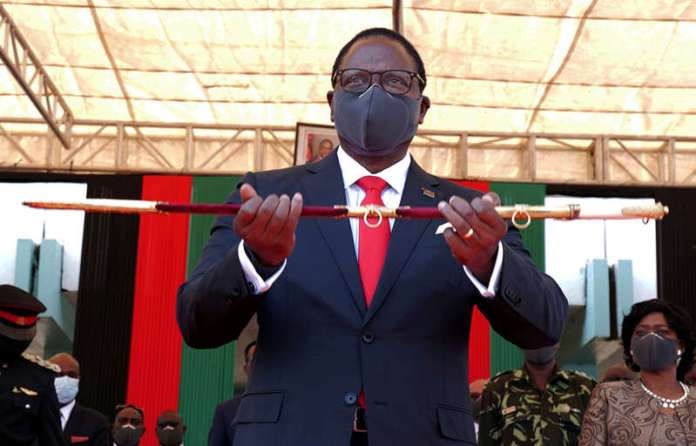
MALAWI President Lazarus Chakwera (pictured) warned on Wednesday that his country’s leading foreign exchange earner, tobacco, was in terminal decline and he urged a switch to high-growth crops like cannabis, which was legalised locally for some uses last year.

Chakwera made the comments during a state of the nation address in which he said tobacco was expected to earn less than $200 million in 2021, a figure roughly similar to the past two years but well below previous annual earnings that used to top $350 million.

‘The inconvenient truth is that while Malawi has come a long way by relying on tobacco as our  largest single crop contributor to our GDP, this reliance is now seriously threatened by declining demand worldwide,’ Chakwera said.

‘Clearly we need to diversify and grow other crops like cannabis, which was legalised last year for industrial and medicinal use,’ he added.

Tobacco was a stain on an otherwise booming agricultural sector, which the president said would enable economic growth to recover to 3.8 percent this year, according to the latest forecasts, and would push it to 5.4 percent next year.

That compared with last year’s lacklustre 1.9 percent growth owing to the fallout from the Covid-19 pandemic.

Decades of public health education have gradually convinced people worldwide of the dangers of tobacco, leading to a sustained drop in sales. At the same time, cannabis has started to be accepted as a medicine.

Malawi’s parliament passed a bill in February last year that makes it legal to cultivate and process cannabis for medicines and hemp fibre used in industry, but stops short of decriminalising recreational use.

‘I have directed (the) Ministry of Agriculture to begin a radical search for a basket of alternative crops so that by 2030, Malawi can do away with its reliance on tobacco, except in limited cases where there are pre-agreed quotas,’ Chakwera said.

Countries around the world are either legalising or relaxing laws on cannabis, including several in southern Africa such as Zambia, Lesotho and Zimbabwe.

Cherry Africa Magazine

0
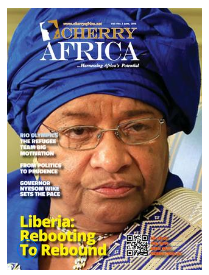
June 2021 edition

Liberia: Rebooting to rebound

Cherry Africa Magazine

0
Cherry Africa Magazine

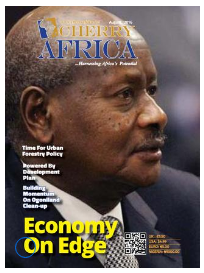
Economy on edge

Cherry Africa Magazine [January]

0
Cherry Africa Magazine

Values of Kagame’s AU Leadership