HOST: Strategic Agricultural Conference in Africa
TOPIC: Large Scale Agriculture as a model for Africa


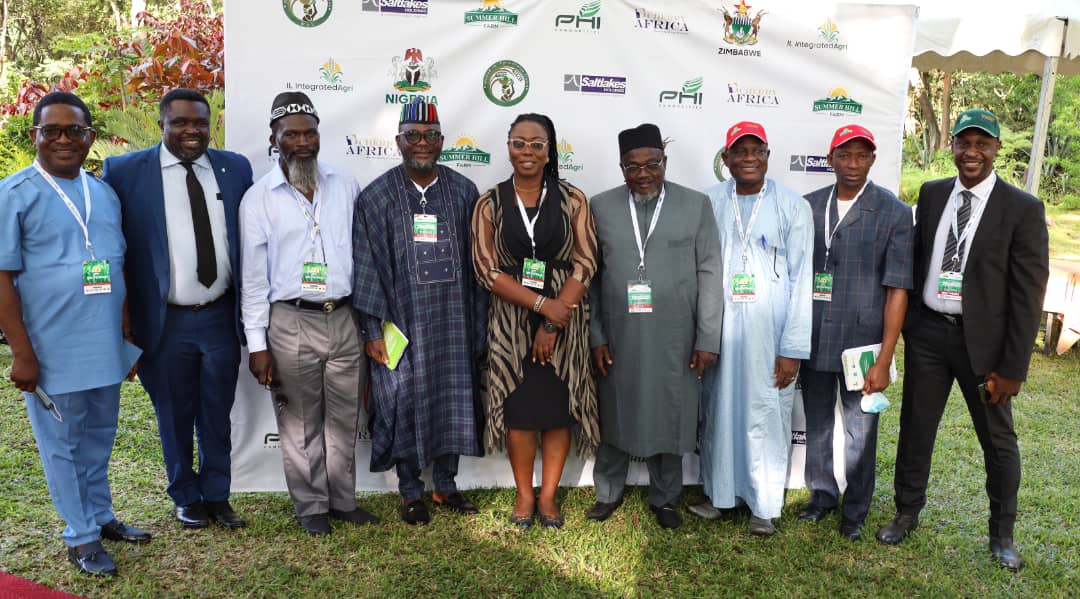
HOST: Strategic Agricultural Conference in Africa
TOPIC: Large Scale Agriculture as a model for Africa
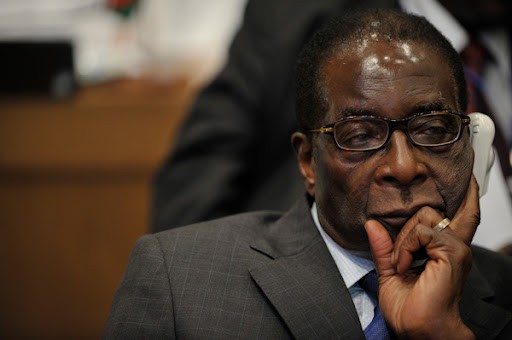
A Zimbabwean magistrate court on Friday ruled that the body of former President, Robert Mugabe be exhumed from his family homestead and reburied at the National Heroes’ Shrine in the capital city of Harare, reawakening the tussle over the late former leader’s resting place.
This development is coming few months after the saga surrounding the final resting place for the man who ruled the Southern African country for over 30 years erupted.
In May, a traditional Chief from Mugabe’s rural Zvimba area ordered Mugabe’s widow to exhume the remains of her husband and rebury at the Heroes Shrine in Harare, where the ruling elite and former fighters in Zimbabwe’s 1970s Independence war are buried and also fined her five cows and one goat for burying her late husband in a manner deemed inappropriate of a former President.
Mugabe’s three children appealed the decision at the Magistrate Court arguing that the Chief acted outside of his jurisdiction
Their lawyer Fungai Chimwamurombe said magistrate Ruth Moyo dismissed the case, ruling that Mugabe’s children were not party to the proceedings by the Zvimba chief and so had no right to launch an appeal.
Mugabe’s relatives oppose his reburial at National Heroes Shrine, saying the man who ruled Zimbabwe for 37 years until he was ousted in an army coup had expressed fears before his death that some of those who overthrew him would seek to conduct a traditional ritual with some of his body parts.
Mugabe, who was ousted in a coup that brought Emmerson Mnangagwa to power in November 2017, died in a hospital in Singapore at the age of 95 and was buried at his village of Kutama after weeks of dispute with Mnangagwa’s government over his final resting place.
No dates have been set for the exhumation following Friday’s ruling.

The African Union (AU) in collaboration with the Republic of Senegal, and the support of the International Organization for Migration (IOM), and the International Labour Organization (ILO), launched, on the 11th September 2021, the 6th Pan African Forum on Migration (PAFOM6) in Dakar under the theme: “Strengthening Labor Migration Governance in Africa in the context of a pandemic for accelerated socioeconomic development and continental Integration”. The forum’s aim is to provide a more focused engagement with all relevant migration stakeholders including Regional Economic Communities (RECs), AU Member States, the private sector, academia, parliamentarians, the African diaspora community and civil society organizations in Africa and to discuss among others; achievements and challenges of free movement of persons regimes in Africa, and examine the urgency to promote effective labour migration governance.
The PAFOM6 was opened officially by H.E. Madame Aïssata TALL SALL, the Senegalese Minister of Foreign Affairs and Senegalese Abroad, in the presence of H. E. Moise SARR, the State Secretary in charge of Senegalese Abroad. H.E. Madame Aïssata TALL SALL highlighted the need to strengthen governance of the labor migration framework in Africa through measures to be adopted towards socio-economic development and the acceleration of continental integration. “Indeed, the integration of migrant workers in development would promote the development of skills and the establishment of linkages that create value”, she said.
The Minister concluded by calling upon AU Member States to support Senegal address common concerns related to the migration issues during its one-year Chairmanship of PAFOM.
Mrs. Cisse Mariama Mohamed, Director for Social Affairs at the AU Commission, delivered the opening remarks on behalf of H.E. Mrs Amira Elfadil, Commissioner for the Department of Health Humanitarian Affairs and Social Development (HHS). She underlined the importance of the operationalisation of the African Centre for the Study and Research on Migration, Continental Operations Centre in Khartoum & the African Observatory on Migration for evidence-based labour migration policies in Africa and called upon the AU Member States to produce accurate and high-quality labour migration data and statistics, to support the development of evidence-based policies and key decisions.
The Director stressed the need to continuously strive to develop innovative ways to adapt to the new norm brought about by the pandemic; while taking extraordinary precautions and observations of the laid down health safety protocol as provided by our health experts”. The Director noted that over 80% of the labour migration movement is experienced within the continent, and there is need for enhanced collaboration among all AU Member States and stakeholders on issues of labor migration governance and the general human mobility in Africa, to develop sustainable labor migration policy frameworks to enhance predictability in decision making and general operations. “There is need for us to identify the gaps and opportunities that exist within the area of labor migration governance, with the view of advancing sound labour and employment policies to safeguard migrant workers’ rights, protection and access to benefits”, she added.
Mrs. Cisse Mariama Mohamed concluded by emphasizing the need to ensure that necessary policy and legal frameworks are established to strengthen data sharing amongst agencies producing and using labor migration data. “These frameworks and mechanisms are key in improving the collection, utilization and dissemination of relevant migration data and statistics among agencies at national level”, she said.
Ms. Cynthia Samuel-Olonjuwon – ILO Assistant Director-General and Regional Director for Africa in her opening remarks delivered virtually, reiterated the ILO’s commitment to decent work and social justice for all workers, including migrant workers. “The 2019 Abidjan Declaration on Shaping the Future of Work in Africa reaffirms this, along with the ILO’s Strategy on Labour Migration in Africa, a long-term vision for achieving a brighter future for African migrant workers”, said Ms. Cynthia Samuel-Olonjuwon. She underlined the devastating and traumatic impact of COVID-19 on migrant workers, and highlighted that the policy coherence and institutional partnerships with the AU Commission and coordination between stakeholders with a mandate on migration, labour migration and employment policies will be of utmost importance to ensure coherence and results on the ground.
Representative of the IOM, Ms. Aissata KANE, Senior Regional Advisor to the Director General of the IOM for Sub-Saharan Africa applauded the dedication of all member states delegates present in advancing the migration agenda in their respective countries and regions, even in the most difficult times and as the world faces the challenges of the pandemic. “None of this would have been possible without the leadership of the African Union Commission and the active engagement of its Member States”, said Ms. Aissata KANE. She noted that the theme of PAFOM this year is relevant as there is no doubt that the COVID-19 pandemic has disproportionately affected developing economies, particularly in Africa, and the closure of borders and the socio-economic effects of COVID-19 have had a particularly dramatic impact on the lives of migrants.
During the two-day Forum, participants discussed, among others, the following issues:
· Supporting Member States (MS) and Regional Economic Communities (RECs) in strengthening Labor Migration in Africa: Overview of the ongoing Labor Migration Initiatives and Programs including the Joint Labor Migration Program in the continent;
· The Impact of the COVID-19 Pandemic on Labor Migration Governance in Africa: Challenges, Lessons learnt and opportunities;
· Strengthening national, regional and interstates collaboration and interstates dialogue on labor migration Governance in Africa;
· Strengthening labor migration research, data and statistics for evidence based policy formulation and implementation in Africa;
· Promoting protection of migrant workers in Africa: Strengthening the protection and policy framework of African Migrant workers in the continent and beyond;
· Promoting skills development, mobility, mutual recognition of skills, qualifications and competencies of migrant workers in Africa; and
· The Nexus between Labor Migration and mobility and the African Continental Free Trade Area
PUMA Energy Tanzania has partnered with three other companies to initiate life insurance cover embedded in smart payment cards for supporting the government’s efforts to increase insurance penetration.
The three other companies are Sanlam Tanzania, Selcom Tanzania and TanManagement Insurance Brokers Limited.
With this product, all customers paying for fuel (minimum of 10,000/-) using Selcom Pay Mastercard QR or Puma card at Puma Energy stations in Dar es Salaam will automatically receive life insurance cover from Sanlam in real-time, valid for seven days.
Puma Energy Tanzania Managing Director Dominic Dhanah said the move was in embracing digital solutions for their customers.
“We always strive to partner with like-minded companies to create more value to our customers. This scheme offers the customers of Puma Energy an added value and is keeping in line with the company’s brand purpose of ‘Energizing Communities’ to drive growth and prosperity,” Mr Dhanah commented during a launching ceremony yesterday in Dar es Salaam.
Chief Executive Officer (CEO) of the Sanlam Tanzania, Mr Khamis Suleiman, said: “We are translating ministry of finance directive by action to ensure we meet the target set of having approximately 50 per cent of the adult population with at least one insurance policy and increase the penetration rate to 5 per cent of the GDP.”
Other benefits from this scheme will include the poverty alleviation and creation of wealth through claims payment for those with bad fortunes.
He said the process flow would assist clients who regularly purchase fuel at Puma Energy stations to cover themselves for life insurance whilst paying through their digital wallets.
Mr Sameer Hirji, Executive Director of Selcom Tanzania said the initiative was part of the efforts to bridge the digital divide in the market.
“This initiative makes use of cutting-edge technology to ensure that we achieve the goal of the insurance service reaching out to as many as possible,” she said.
Commenting, Mr Mohammed Jaffer, Group CEO of TanManagement Insurance Brokers Limited, said “insurance has to be made part of our daily lives, whether by direct purchase or value addition; it is one of the most basic requirements in these days.”
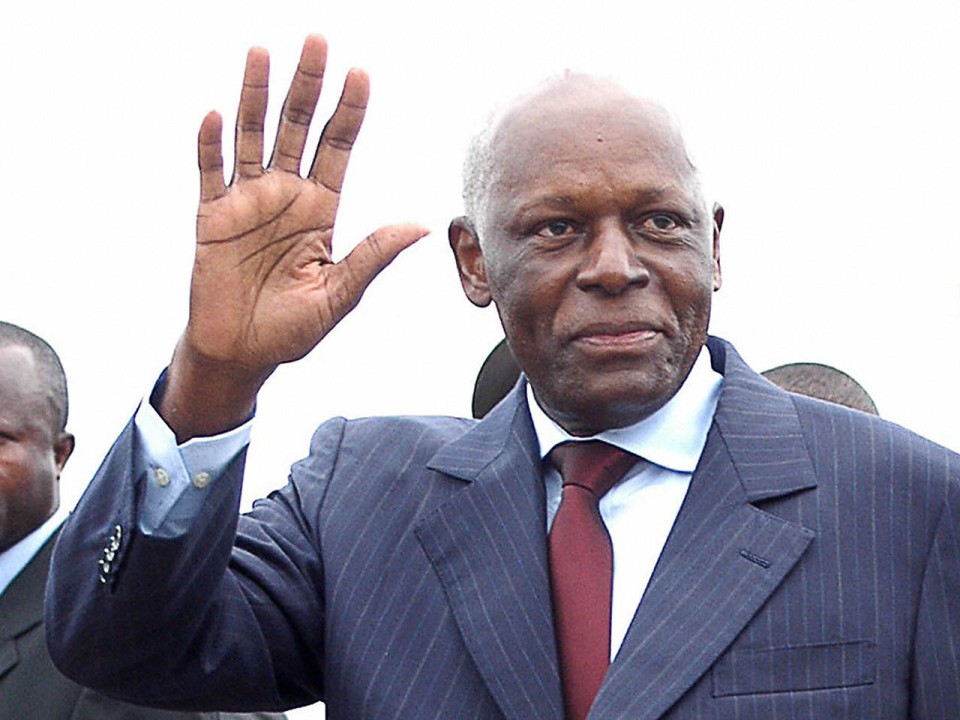
Angola’s former president Jose Eduardo dos Santos on Tuesday 14th September 2021 returned to the Southern Africa nation from Spain, after almost three years of self-imposed exile due to the new government crackdown on his family’s multi-billion dollars business interest
Dos Santos, who ruled Africa’s second-biggest oil producer from 1979 to 2017, arrived Angola’s capital Luanda on Tuesday morning after spending close to thirty months in Barcelona-Spain. The 79-year-old’s return suggest a possible understanding with President Joao Lourenco, who began targeting his predecessor’s children almost immediately after coming to power in 2017.
Critics say corruption was rife during his rule, with wealth amassing in the hands of selected few and billions of dollars allegedly embezzled from state-owned companies. The former leader was severally accused of appointing relatives and friends to top positions during his 38-year presidency of the oil-rich nation.
President Joao Lourenco, who was hand-picked by his predecessor Jose Edwardo Dos-Santos as his successor, took office in 2017 with a pledge to tackle the country’s abject poverty and jobs shortage, and a promise to root out graft and restore the oil-dependent economy.
The former Minister of Defense under Dos Santos, vowed that he would not be a puppet ruler barely a day after the vote “I will have all the powers, this country will not have two presidents”, he said in response to Amnesty International call for Lourenco to “guide the country out of the spiral of oppression” and castigation of Dos Santos’s “appalling human rights record”.
Within months of coming to power in 2017, Lourenco fired Dos Santos’ eldest daughter, Isabel, as chairwoman of state-owned oil company Sonangol, a position she held briefly between 2016 and 2017 during her father’s rule. Two years later, Angolan authorities froze her assets in Angola and abroad, alleging syphoning of state funds into offshore assets, accusations she vehemently denied
Prior to the freeze order, Isabel was worth about $2.4 billion, making her Africa’s wealthiest woman, according to data compiled by Bloomberg. Her half-brother, Jose Filomeno Dos Santos, was sentenced to five years in prison in August last year after being found guilty of embezzlement and fraud – a ruling he’s appealing.
Jose Eduardo Dos Santos has not himself been charged in any corruption case. He returns ahead of the ruling MPLA’s party congress in December and presidential elections next year. Angola remains stuck in a five-year long recession, while awaiting the next moves
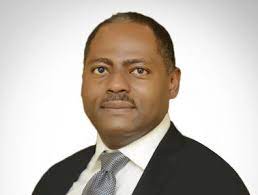
The Nigerian Gas Association is the apex organization representing numerous stakeholders in the gas sector within the Nigerian Oil & Gas Industry, with the vision of effectively advancing the role of Nigerian Natural Gas as the preferred energy source. In this interview, Ed Ubong, President, Nigerian Gas Association {NGA} speakswith Carolyn Isaacon sundry issues of concern in the sector andthematic areas of concentration critical to realizing the objectives of the ‘Decade of Gas’ among others.
As President, Nigerian Gas Association, how do you plan to strengthen and develop the gas sector in terms of expansion of the economy through employment?
The Nigerian Gas Association is collaborating with the government and its industry partners to unlock the potential in the gas value chain and create an enabling environment for Nigerian gas sector to thrive. This will yield a myriad of economic opportunities including employment.
The NGA is working with its stakeholders to accelerate gas sector development across seven thematic areas: unlocking the domestic gas to power value chain; accelerating infrastructure development including virtual pipelines; driving gas based industrialization; deepening domestic LPG penetration, building a stable regulatory environment anchored on a willing buyer-willing seller pricing regime; growing the export and regional gas market, building local capacity/content for contractors and professionals in the gas sector.
These seven thematic areas are critical to realizing the objectives of the ‘Decade of Gas’ and need to be pulled together in a Nigeria Decade of Gas Masterplan (NDGMP) that provides a roadmap that allows Nigeria utilize its huge gas resources for its socio-economic development
What technologies or ideas has the gas sector put in place to ensure that we are able to get a proper value chain for the benefit of the economy especially looking at the gas sector beyond just Liquefied Natural Gas?
We know that in Nigeria the LNG export gas market has provided significant revenues for Government and is more developed than the domestic gas market. It is therefore imperative that we deepen the domestic gas value chain to increase domestic gas production and consumption. Most of the gas in Nigeria is produced in the East whilst the largest demand centers are in the West and North, so we need infrastructure to bridge the supply and demand gaps and increase gas consumption. We are seeing increasing infrastructure development with OB3, ELPS 2 and AKK but these pipeline constructions take time. In the interim, we need to deploy innovative solutions to connect the existing local supply and demand. This has led to increasing use of virtual pipeline infrastructure (CNG, Mini LNG) to meet this demand in the short term before the pipeline infrastructure is available. This has also enabled us to supply gas to areas that are off grid thereby creating new markets for gas in Nigeria.
What about the technical expansion of knowledge base for managing the gas sector, are we going to have a situation where more of the local content will be involved in developing the gas sector, unlike the oil sector where expatriates dominated.
I believe the days of having expatriates dominate the oil and gas industry are behind us. We will all agree that the oil sector went through a bit of a learning curve but if you look at the oil industry in Nigeria today, over 90% of workers are Nigerian staff. As a result of the collaboration between Nigerian Content Development &Monitoring Board {NCDMB} and the IOC’s to ensure knowledge transfer and capacity development, we have been able to develop seasoned oil industry professionals in Nigeria.
The Nigerian Gas Association is also focused on building human capacity and developing talent to move this industry forward. As we look forward to developing a gas-based economy in Nigeria, one of the NGA’s priorities is ensuring that we have skilled and competent individuals to lead and accelerate this transition. The skillsets required in oil production and gas production/distribution are quite different so the NGA is looking at how we can retool the seasoned oil professionals for gas sector delivery. In this vein, we are seeking to collaborate with various stakeholders to deliver training programs that will build the required technical skillset for gas sector development. We are confident that most of the talent required for this transition to a gas-based economy, will come from Nigeria.
The PIB was recently passed and it has raised more dust. Can you just prospect what you could see as the good, the bad and the ugly of the bill?
The industry has been anticipating this moment for a long time so it is great news that the PIB has made progress through the national assembly and has been sent in for executive assent. Engagements with key stakeholders have to be continued as the bill seeks to address numerous areas of concern including governance, funding, pricing, royalties and taxes, community development, environmental management and much more. Overall, we need a PIB that creates an enabling framework and environment to support gas sector investment and development.
Can you talk a little on your policy thrust and the plans for gas in the West African sub region?
There is a need for additional investment to further develop infrastructure along the gas value chain so to extend the gas networks and reach countries in West Africa. There is clear demand for gas with roughly 350 million people across the ECOWAS states and there are vast gas resources across the sub-region. We, however, need to connect the supply and demand and the cheapest way to achieve this is through pipelines. We have the West African Gas Pipeline system (WAGP) which transports natural gas between Nigeria, Benin, Togo and Ghana. We would like to see regular supply on the line, increased capacity in the system as well as expansion of this infrastructure to other parts of the West African sub-region. Apart from gas pipeline infrastructure, we also have to develop linkages for finished products and raw materials in the West African market via roads, seaports, rails and by air freight.
Finally, As the President, Nigerian Gas Association, what does the “Decade Of Gas” as declared by President Buhari mean to you and how will it benefit the common man?
The declaration of 2021-2030 as the “decade of gas” is the realization by the Nigerian Government that Nigeria is, indeed, a gas nation whose gas production and consumption needs to be accelerated. For me, I believe the most important indicator of success for the average Nigerian citizen will be reliable electricity/power supply. Currently, 85 million Nigerians do not have access to grid electricity; therefore we must unlock the challenges in the gas to power value chain to improve access to energy for Nigerians. This will require pragmatic steps to address structural issues across the on-grid value chain ranging from interruptions in gas supply, transmission grid losses and outages, inadequate metering infrastructure, illegal connections. We must also ensure payment of outstanding gas and power invoice arrears and securitize current and future revenues. To the common man, access to energy will be a key success factor for the ‘Decade of Gas’.
Harnessing our vast gas resources is key to development of the country. Natural gas gives us the ability to lift millions out of energy poverty, giving people the power to improve their physical health, wellbeing and standard of living. It also gives us a pathway to economic growth and development, not only through direct exploration and trading of gas resources but by providing reliable power supply for the manufacturing and industrial sectors which are the major growth engines for developing economies.

Gastech, the world’s foremost exhibition and conference supporting the gas, LNG, hydrogen, and energy industry, and the SPE Annual Technical Conference and Exhibition (ATCE) will take place alongside each other in Dubai from 21-23 September 2021, the organisers of both events announced today.
The co-location of Gastech and ATCE, at the Dubai World Trade Centre, will mark the first-time industry professionals, from across the global energy value chain, will have met in-person to reconnect with colleagues, and debate and collaborate on how best to maintain business continuity and remain competitive post COVID-19.
Michelle Boyd, Chief Global Events Officer for the Society of Petroleum Engineers, the organisers of ATCE, said: “Co-locating ATCE with Gastech means visitors will be able to visit both events’ exhibitions without the need to register twice. It will also ensure our exhibitors gain maximum exposure to a broader audience of energy industry professionals, including the top decision-makers from all sectors of the industry.”
Christopher Hudson, President, dmg events, organisers of Gastech, said: “Gastech has had a long and successful relationship with the Society of Petroleum Engineers, and we are delighted ATCE will be co-located with Gastech. With both events taking place at the same time, at the Dubai World Trade Centre, it will provide more face-to-face opportunities for industry professionals to build the long-term business relationships that will advance the energy industry post pandemic.”
ATCE’s technical programme will cover existing applications and emerging technologies within all phases of upstream oil and gas. The event’s conference will provide opportunities for learning and collaboration at strategic panels, technical sessions, and seminars, while the concurrent exhibition will showcase the latest technologies from around the world.
Since the first edition 97 years ago, ATCE has attracted the E&P industry’s greatest minds from around the globe. Reflecting our global industry, ATCE is becoming an increasingly important international event. Florence hosted ATCE in 2008, Amsterdam hosted the conference in 2014, and in 2021, SPE returns to the Middle East for the second time, in Dubai.
The Gastech Strategic Conference programme brings together speakers from across the full energy value chain, from energy ministers to industry CEOs. It features four discussion formats including 15 Ministerial and Global Business Leaders Panels; 5 C-Suite Dialogues; 3 Gastech LIVE sessions; and 11 Strategic Insights covering the entire energy value chain. Among the key topics to be discussed will be decarbonisation and emissions management; financing and project investment; how to adapt business models in a post-Covid world gas and LNG supply and demand dynamics and the potential for hydrogen to play a key role in our collective energy future.
The Gastech Technical Conference brings up-to-date coverage of original research and findings, latest technological breakthroughs, new applications, and valuable learnings for the natural gas and wider LNG industry from technical engineers and innovators. Themes cover diverse areas including shipping, small-scale LNG; marine bunkering; hydrogen; gas processing; AI and automation.
For 49 years, Gastech has been at the heart of the gas, LNG, hydrogen, and energy conversation. Gastech 2021 will be attended by more than 15,000 attendees, including senior decision-makers and energy industry thought leaders, and 250+ exhibiting companies, who will set the agenda for the global gas, LNG, hydrogen, and energy industries for decades to come.
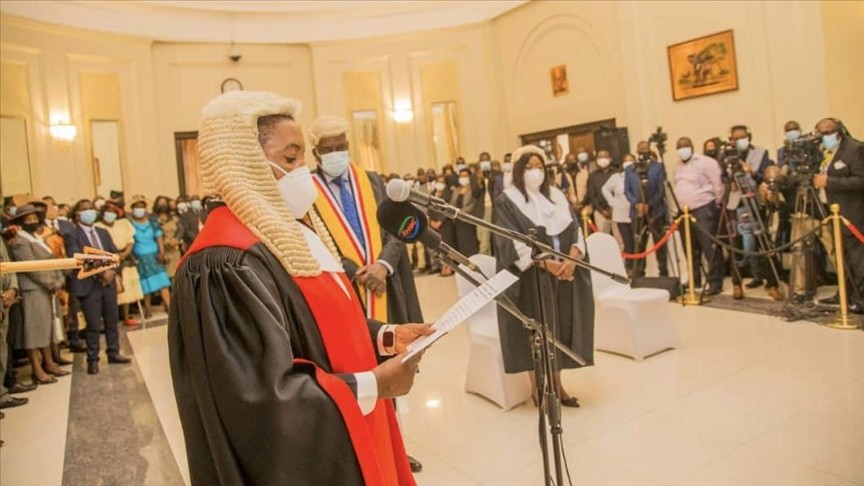
Lusaka’s renounced lawyer and human rights activist. Nelly Mutti has emerged the new Speaker of the National Assembly replacing Mr. Patrick Matibini, a retired high court judge who served as Speaker for 10 years. This change of government comes as a result of general elections held August 12 2021 where the opposition leader Hakainde Hichilema emerged winner of the Presidential election in Zambia defeating incumbent President Edgar Lungu.
It was the first time Lawmakers in Zambia will elect a woman as Parliament Speaker since the country’s independence from British rule in 1964. Mutti was duly elected during the first section of the 13th National Assembly on Friday 3rd September and she sailed through unopposed
According to the Country’s constitution, the Speaker of the National Assembly of Zambia is a position established under Article 69(1) of the constitution. The Speaker is elected by members of the Assembly from anyone eligible to be elected to the National Assembly, but cannot be a sitting member. A Speaker is nominated by either the President or the political parties with majority representation in parliament and must be subjected to an election if there is more than one candidate.
Mutti, a former chairperson of the anti-corruption commission of the country, also served as Vice President, Law Associate of Zambia {LAZ} and was later appointed by President Levy Mwanawasa as Commissioner on the Constitutional Review Commission {CRC} to draft the country’s new constitution.
Nelly Mutti was sworn in along with her two deputies – Attractor Chisangano, a member of President Hakainde Hichilema’s United Party for National Development (UPND), and Moses Moyo, who was elected to parliament as an independent candidate.
In his address at the ceremony, President Hichilema said Mutti’s election championed the cause of women in leadership roles in Zambia.
He vowed to let parliament operate independently and without any influence, urging legislators to give top priority to people’s welfare.
On her appointment as the country’s first female Speaker of the National Assembly, Nelly Mutti said “It’s an honour to me, as a Zambian first of all, that I have been given this opportunity to serve the people of Zambia in the capacity of Speaker.
“Being a woman really is not a qualification but what is important is that when you are given a responsibility, you will be able to deliver. Competence is always an important issue”.
Earlier on, 155 newly elected members of Zambia’s parliament took oaths of office, signaling the commencement of legislative sessions after August general elections.
Prominent among them was the daughter of immediate past President Edgar Lungu, Tasila Lungu, who won a seat in Chawama township, her father’s former constituency in the capital Lusaka.
Members representing both the ruling United Party for National Development (UPND), now opposition Patriotic Front (PF) and independents took the oath before the clerk of the National Assembly, Cecilia Mbewe.
Hichilema’s party UPND has the lion’s share of lawmakers with more than 80 of 155 seats, while the PF accounts for a little more than 60 of the seats, with the rest held by independents.
Hichilema will ceremonially open the first session of Zambia’s unicameral parliament, known as the National Assembly, under Mutti’s leadership on Sept. 10, where he is expected to outline his vision for his government’s five-year term.

Lafayette Matthews
In a video interview with CherryAfrica recently, a middle-aged Liberian clergy living in Monrovia, when asked about the situation in the country under President George Weah, simply gestured the slitting of the throat. Upon further enquiry for clarifications, the clergy gestured that he could not talk because he feared some informants might hear him talk and that would lead to sponsored assassins coming after him.
Another Liberian, a senior civil servant in the country’s ministry of finance, who pleaded with CherryAfrica for anonymity says he went to the United States on vacation and has no plan to come back. He beats his chest for staying in Liberia through the heat of the entire 14 years of civil war, but says the current situation in Liberia has become too difficult to bear, citing economic hardship, ritualistic killings and hired assassinations as the order of the day in the country, which frightens him on the thought of returning.
In yet another video interview with a top civil servant, who also pleaded anonymity with CherryAfrica, he alleged that the country’s economy is squarely in the hands of four government officials, including the president, who are living fat on the daily hardship being experienced by the people. He also said he could not speak with CherryAfrica for long because he feared informants could be around monitoring his conversation, which could lead to his being assassinated.
This state of affairs is reminiscent of government officials in the heart of investigations of misappropriated funds in early October, leading the Institute of Internal Auditors of the United States to ask the State Department to help authorities in Liberia investigate the suspicious deaths of four government auditors looking into possible misappropriation of funds.
The four deaths happened over eight days, from October 3-10. They involved Emmanuel Barten Nyeswua, director general of the Liberia Internal Audit Agency, Albert Peters, Gifty Lama and George Fanbutu, who all work for the Liberia Revenue Authority. All four auditors reportedly were conducting audits of Liberian government accounts over allegations of misappropriation of funds. Nyeswua died of an apparent fall, while the others died in apparent car accidents.
The experiences are typical of life in Liberia today. Under the immediate past president, Ellen Johnson Sirleaf, Liberians in the Diaspora returned home in droves. Under President George Weah, the antithesis has been panning out over the past three years of his first six-year tenure.
Despite high expectations placed on Liberia’s new president George Weah, who came to power through Liberia’s first democratic transition of power in more than 70 years, corruption continues to permeate Liberian politics and the public service. Allegations of patronage, nepotism and cronyism plague politics; petty corruption is rife, and judicial independence is weak, coupled with mysterious deaths and perceived reign of terror.
Weah’s election win was a watershed moment for Liberia’s poor, many of whom idolised the man who rose from Monrovia’s slums to football stardom, and the nation’s highest office.
At the start of his regime, Weah launched popular road-building projects and abolished undergraduate tuition fees.
However, his early actions and populist rhetoric are at odds with the realpolitik demands of managing an entrenched political class and a political system designed to defend their privilege. Weah is surrounded by people linked to past corruption and mismanagement, or with ties to key figures in Liberia’s civil war. Weah has also been subject to criticism due to his involvement in the construction of a luxury housing estate and expensive renovations to his private real estate portfolio.
Three years into his presidency, many complain he is failing in his economic stewardship. People struggle to get bank notes from ATMs, civil servants regularly go unpaid and inflation soaring to more than 30 percent has eroded purchasing power. The local currency, the Liberian dollar, has lost value by approximately 20% since his assumption of power.
Under Weah’s watch of just under three years, more than half of Liberia’s 4.8 million people live on less than $1.90 (1.69 euros) a day, according to the most recent World Bank data.
“We saw George Weah as one of us because he came from a poor family,” said university student Andrew Seiwon. “But for the past almost three years everything has been promises.”
Part of Liberia’s economic woes under Weah, though, can be attributed to the exit of the United Nations and other international aid and non-governmental organisations.
Analysts say Liberia suffered a double whammy when aid organisations started to exit the aid scene, coupled with an inexperienced government that had no ideas to absorb the looming economic hit.
The United Nations was Liberia’s second-largest employer after the civil war, underscoring the impact of the departure of aid workers.
The situation has entrenched corruption across the civil and public service. According to 2018 Global Corruption Barometer data, almost half of Liberians reported that the level of corruption in the country increased over the year, with the police, National Electoral Commission and National Assembly perceived to be the most corrupt. The police rank as the institution that citizens most frequently acknowledge bribing.
Low salaries are often cited as a reason for petty corruption, particularly in the form of bribery whereby public servants seek to supplement their income. As if to exacerbate things, the legal framework is poorly enforced, which has contributed to a culture of impunity.
It is worth noting that following the mysterious disappearance of millions of dollars in 2018, the Weah-led government launched an investigation into the discovery of the missing amount, equivalent to approximately 5% of the country’s GDP.
Kroll’s report, entitled “Project Fabre”, provides a forensic analysis of the approval for printing additional banknotes, the awarding of the contract to a Swedish firm called Crane AB, the shipping of the banknotes and the movement of the funds to and from the country’s central bank vaults.
Although the investigation dismissed the suggestion that all of the new banknotes are missing, it does reveal significant mismanagement and potential corruption.
In addition, a $25 million intended to mop-up excess Liberian dollars with United States dollars was reportedly mismanaged. A report from the General Audit Commission (GAC), the independent constitutional external auditor of Liberia, which supports Legislative oversight over the management of public resources highlighted discrepancies in how the funds were utilised. Months after release of the GAC report, on instruction of the Ministry of Justice, the Liberia Anti-Corruption Commission is still investigating the matter, with many persons harbouring fears that those implicated might not be prosecuted.
A report by Glencourse and Yealue say legislators are more beholden to their patrons and cronies than to their voters and as a result, Liberian politics suffers from a lack of accountability. There are several high-profile cases that illustrate the nature of political corruption in Liberia.
The medley of poor governance, corruption, lack of transparency, which discourages international aid puts Liberia under George Weah on an economic decline, which is causing national discontent.
In an apparent dint to quell dissent, it is alleged that the government has resorted to a reign of terror.
In the midst of all that, Weah still enjoys staunch support from a sizable portion of the population.
One of his supporters, in expectation of a better Liberia under Weah is quoted as saying: “The same way he used to score last-minute goals to qualify his teams when he was a footballer,” he said. “He will do the same for us.”
4, Joy Bell Tower,
First Floor, Tulaku Street Ashaiman,
Greater Accra Region,
Tema - Ghana
Tel: +233 24 462 9245; +263 712 941 009; +234 817 777 7503
[email protected]; [email protected]
© 2026 Cherry Africa. All Rights Reserved. Website Designed By Frandimore