Home Blog Page 6

The Menzgold heartache in Ghana

0

Two years after people staked their hard-earned money in what they thought was a good bet, they have realised that it was a Ponzi scheme. Komla Adom reports from Accra.

In September 2018, thousands of persons got their funds locked up in what many have described as one of the biggest financial scams in Ghana’s recent history. Students, doctors, teachers, mine workers and many were affected. Official records show at least 200 million Cedis have been locked up in the gold dealership firm, now widely tagged as a Ponzi scheme. The impact remains far-reaching and difficult to quantify.

Worst affected victims

There was a meeting with thirty-seven year-old Ayambilla; bedridden for more than a decade after surviving an accident. Escaping a ghastly road accident which killed nearly everyone on board a commercial bus en route his father’s funeral, has left him almost permanently paralyzed!

“It was the worst day of my life, I literally saw my life snuffing out of my body,” Ayambilla said as he struggled to string his words together.

He said: “As I sit, it is like they are using pins to pierce me inside. I feel immense pain because of the fracture in my back. The bone is completely broken and as I sit, I cannot control urine.”

Convinced by a friend, he invested an amount of money raised to cater for his medical treatment in the gold dealership firm, Menzgold!

“I had my doubts, but I thought I could invest the money in Menzgold, get returns and fly out of the country to seek treatment to make my condition better.”

Shutdown of the company, meant his funds and that of several other thousands of people were locked up. It has been a daily struggle for Ayambilla since September 2018; he still cannot do anything by himself and cannot control urine.

“Since the company was shut down on September 12, 2018, it has not been easy for me at all. I have had sleepless nights, in addition to the pain of being consigned to one spot. It’s been pain after pain each passing day,” Ayambilla told CherryAfrica. His hope is wearing thin, fearing, at 37 years and with his predicament, his days on earth are numbered

But, Ayambilla is not alone. Travels to Kasoa in the Central region of Ghana also exposed more on the effect of the scam. It is where sixty-three year-old pensioner, Francesca Dzoboka, now lives, in an uncompleted structure offered her by someone who introduced her to the Menzgold Company. She is down with stroke and facing death threats constantly from her husband who is blaming her for the woes of the family, after their combined investment of sixty thousand cedis was locked up.

“My husband says he would kill me if I do not go and find his money for him. He is not talking to me. He said our diets have become poor and we now feed off the benevolence of others,” a distraught Francisca said while tears streamed down her cheeks. The pensioner says she is unable to afford a decent meal after two years of frustration following the collapse of gold dealership firm, Menzgold. She convinced her husband to contribute 20,000 cedis to add up to her 40,000 she raised to invest in the firm. But exactly six days after the transaction, Menzgold shut down.

Francisca cannot hold back her tears. “I was entertaining some fears, when my friend introduced me to the firm, but I wanted to make life better for us all and also help see my son through university.”

With her 85 year-old bedridden sick mother, and her last child almost dropping out of medical school, Francesca says her world is crushing; a teaching career of more than 40 years almost means nothing now.

“If they pay me back my money, I can take my mother to the best hospital to seek medical care and I can also treat myself,” stated as she sunk her face into her cloth, trying to hide the tears.

Regulatory interventions before Menzgold shutdown

The Bank of Ghana on Tuesday December 5, 2017 in a notice issued and signed by the secretary of the Central Bank Caroline Otoo, stated that despite the several cautions to Menzgold Ghana “to desist from solicitation, receipt of money and the payment of dividends to its clients, the company persists in its deposit-taking activity.” According to the BoG, this was in breach of section 6(1) of the Banks and Specialized Deposit-Taking Institutions Act, 2016 (Act 930). The notice said that Menzgold is not licensed to receive money and pay dividends to clients. A year later, on September 7, 2018, the Securities and Exchange Commission (SEC) ordered Menzgold to shut down operations. It further requested the company which had been on the warpath with the Bank of Ghana, not to accept new investments.

After the shutdown

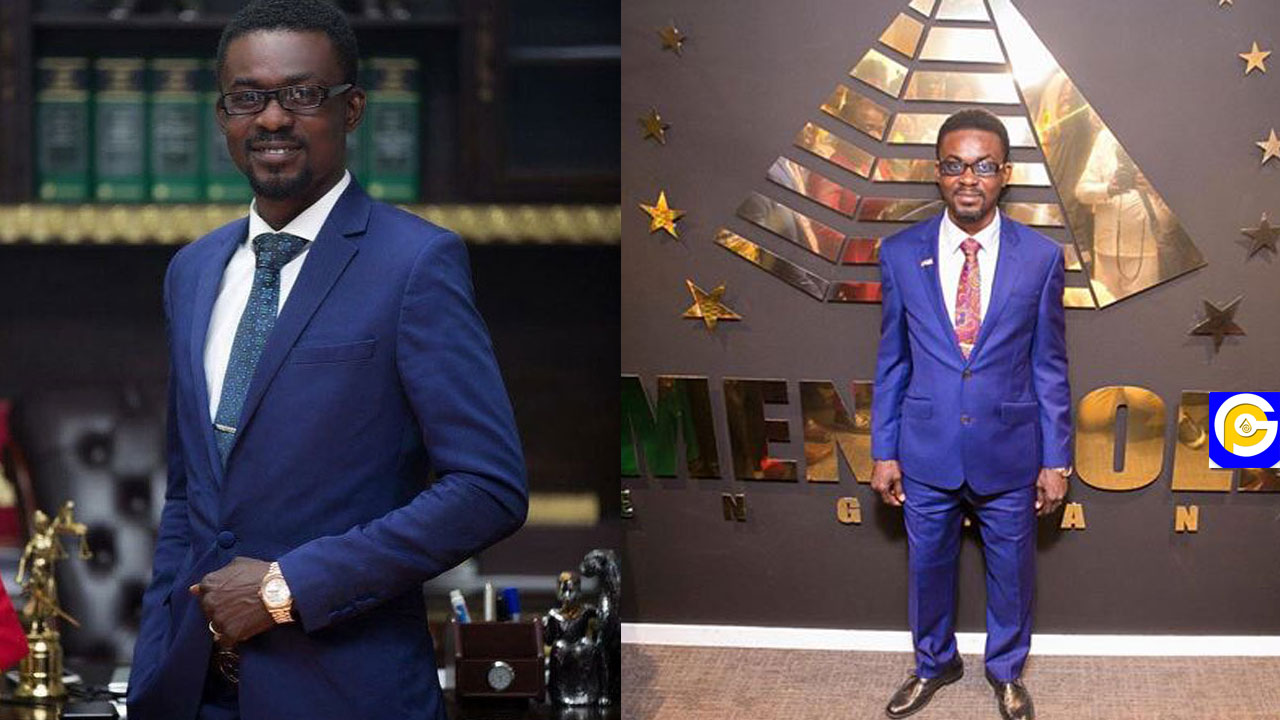
Days and weeks after Menzgold was directed to close shop, agitated customers thronged the various offices of the company to attempt to retrieve their monies. They visited their anger and frustration on some journalists at the scene. Since then, there have been countless protests by agitating customers demanding their locked up funds. One hundred customers were in January 2019 arrested for storming the Trassaco residence of chief executive officer of the defunct company, Nana Appiah Mensah to collect their monies after he returned to Ghana from Dubai following his arrest over a botched gold deal.

Any moves to pay back depositors?

Officials of the gold dealership told the media, Nana Appiah Mensah won an appeal case with Dubai based Royal Horizon Diamond and was expected to be paid over 35 million dollars owed him. On August 19, 2019, CEO of the company, addressed the press following his return from detention in Dubai. He admitted it’s been a tough road and assured the company would work to honor its financial obligation to its customers.

“To our Menzgold customers, we note that you have experienced an increased level of anxiety and concern but have been extremely patient with us through these trying times,” the CEO of the defunct company told pressmen.

Nana Appiah Mensah said: “We recognize your sacrifice. Please remember that your patience with us has been earned by the way we worked with you diligently over the past years. I can assure you that it would pay off favorably soon.”

He concluded a tense press briefing by urging customers to remain calm, “as we work to meet our obligations and to the government of Ghana, we applaud you for not sparing the rod and spoiling the child.”

Any hope for the customers?

But after more than a year the customers say it has been one excuse after another and the over ten thousand affected members continue to wallow in penury. According to executives of the coalition of aggrieved Menzgold customers, more than sixty of their members have died in the last two years since the debacle! A commemorative event to mark two years since the collapse of the company on September 12, and a wreath-laying exercise in memory of the deceased in Accra, was also scuttled by the police. It’s been a long tortuous road for these customers – several appeals to the Securities and Exchange Commission and government to intervene have proven futile.

For now, Francesca, Ayambilla and many other affected customers would hope some help would come – after a migration and validation exercise sanctioned by the company.

Court and legal processes

The Economic and Organized Crime Office (EOCO) in January 2019, secured a court order confirming the freezing of landed properties and Vehicles of embattled CEO of Menzgold, Nana Appiah Mensah. The properties affected include Menzgold Ghana Limited, Menzgold office complex, Zylofon Arts complex, Brew Marketing Consult, Star Madrid Football Club, Zylofon Music and Media Company Limited.

Others include Brew Energy Company Limited, G-Tech Automobile Service, Two (2) properties located at Trassaco Valley (plot No. 315 and plot No. 337 , Plot of land No. 54 near Oak Street Trassaco Valley), uncompleted residence, 510 acres of land. EOCO in a statement directed all employees of the affected companies, relatives and friends who are in possession of any such properties to surrender same by the authority of the High Court to EOCO. Checks with EOCO indicate all the frozen assets have been handed over to the police Criminal Investigation Department (CID). Officials from the legal team of EOCO said: “EOCO has since 2018 prepared the docket on the matter under the supervision of the head of public prosecutions and the Attorney General’s office and handed over to the police CID.”

“All movable and immovable assets of the defunct company and documentation have also been handed over to the CID.”

Police sources within the CID, say investigations have been concluded and the case currently before court. But the customers say the longer the case hangs, the worse they become. Two years on, has there been any lessons learnt from the Menzgold heartache? Chief Executive officer of Dalex Finance, Ken Thompson believes not.

“It was such an obvious scam and I don’t know how we allowed it to happen. And I am not sure it would not happen again,” he stated.

He added: “It was almost as if the messiah had come and was changing peoples’ lives. Whenever these things happen, it derails the trust people have in the financial system.”

And on whether or not these aggrieved customers would ever get their monies back, Mr. Thompson says there is no hope.

“As for the people who have lost their monies, it is unfortunate, they may not get it back. If they get something back, then it probably would be from the generosity of the state,” he further stated.

With the Menzgold heartache, arguably the most publicized financial scam in recent memory, experts say the relevant agencies must act to ensure the players in this circus are prosecuted.

“It is such a shame that two years on, people are still walking. Nobody has been prosecuted, Nana Appiah Mensah is probably living in luxury in his mansions and other properties that are left.”

Thomson’s view: “It would have been nice, if some people felt that justice had been done, it would have given them some sense of closure even though it would not bring back those who have died.” Francesca, Ayambilla and many others like them who are battling depression, stroke, permanent deformities and other health conditions would hope sometime soon, they would hear good news! But how long can they wait?
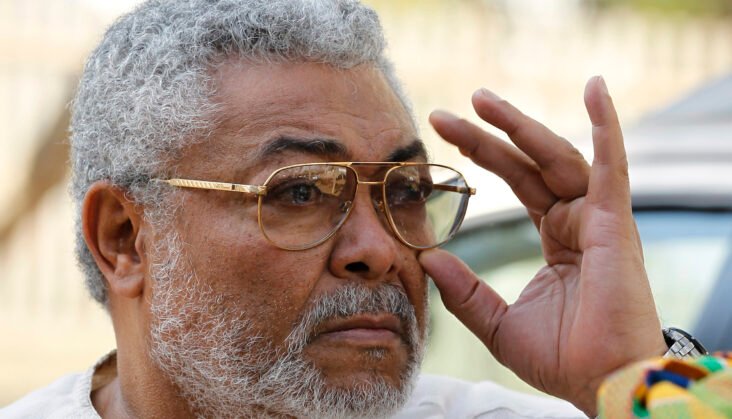
Tributes to an enigma; Ghana’s first president of the fourth republic Jerry Rawlings!

0

Boom the man

Jerry boom. Papa Jay. JJ. Junior Jesus. Gyato. A man of the people. Call him any of these and he was sure to give a firm military-style wave or a fist power sign. He was charismatic. He was tough. But the little boy, who had wanted to fly an areophane at age six; grew up to become even more – a key cog in Ghana’s political and democratic history.

Oh what a man! He meant many things to many people. To some, a breath of fresh air, at a time of uncertainty in Ghana’s political history. To others, a cruel military leader who masterminded the torture and killing of some military generals and judges, several decades ago. One of them, is daughter of Ghana’s former military head, Ignatius Kutu Acheampong, who ruled over Ghana from 1972-1978 through a military takeover. According to Nana Serwaa Acheampong, Rawlings’ death was too easy and comfortable as compared to how he took the life of her father by firing squad when she was just 6 years old. She took to social media in a no holds barred rant!

Bitter tributes?

“Rawlings is dead, to me his death was too easy, too comfortable, unlike the death he gave my father and countless others. Now he’s dead, and somehow I feel robbed, cheated because unlike my father, Rawlings’ death was too easy, too comfortable probably.” Another, Akoto Afrifa whose father was one of the eight army generals who were executed by Rawlings and his Armed Forces Revolutionary Council (AFRC) in the June 4 Uprising in 1979, did not mince words in his outburst after news broke about Mr. Rawlings’ passing.

In a series of posts on Facebook, Akoto Afrifa wrote,

“This death is not tragic enough…

“…unlike the Osagyefo who died miserably in a faraway country…

“…and unlike my mentor and my inspiration, the Arch-Tribalist Awoonor who also died tragically in a faraway nation….

Tributes, memories of a core!

At ninety years old, Rebecca Adukwei Mingle alias The Girl, remembers and quite fondly too, a relationship with the Rawlings’ which spanned more than 6 decades. Spotting a National Democratic Congress (NDC) T-shirt, over a white and black striped cloth, Rebecca Mingle sat at the foyer of the party headquarters in Accra, weeping and wailing few minutes after news of his death broke.

“I have known the Rawlings’ for many years. Since our days in Kumasi when his mother and I were baking bread; the late former president used to come over the house to pack up his mother’s flour bags,” she told me.

She recalled, specifically, during the famine in 1983, an intervention by the late president for her family.

I remember during the famine,Rawlings will send soldiers to my house to ensure all the bread I baked at the time were sold and the monies given to me. I do not know what I would have done, had he not taken that decision many many years ago,”MadamAdukwei Mingle told me.

It did not look like the nonagenarian was done eulogizing the late Jerry Rawlings. She would sneak in one final memory; arguably, the most intriguing.

Rebecca Adukwei Mingle revealed, “Rawlings gave me five hundred cedis when we travelled to meet Burkina Faso’s Thomas Sankara at a time I had not seen any such bulk amount of money of my own before.”

“It is one gesture that always remains with me. The family of the Rawlings’ were like my own family,”said the 90 year-old who was reaching out to her bag to probably pull out a towel to clean up some of her tears and sweat.Rebecca Adukwei Mingle is just one of many who continues to eulogize the father of four!Executives of the party he founded; the NDC say the loss of the former head of state is a blow they would struggle to recover from; but they would emerge from this even stronger.

Deputy Greater Accra Women’s organizer of the party, HajiaIddrisu Alima told me, “the late Jerry Rawlings was a disciplinarian. He was a principled man; and he instilled these values in us. It is a big blow, but we would try, because we have an election to win.”

Dignitaries and leaders pay tributes

No words. Tears. Sorrow. Grief. As Ghanaians adjust to the reality of the death of one of their most loved and loathed leaders in equal measure, several world leaders have been sending in their condolences. Nigeria’s President Muhammadu Buhari in a “heartfelt condolence” said “the entire African continent will sorely miss the sterling qualities of the great leader.”

He also said he “believes the passion, discipline and moral strength that the former Ghanaian leader employed to reposition his country over many years” would “continue to reverberate across the continent and beyond.”

The President of Liberia, George Weah in a tweet said “Africa has lost a great leader.” In Burkina Faso, the president, Roch Marc Christian Kaboré said Ghana has lost a patriot who put the country back on the path of growth.

Ghana’s president Akufo-Addo stated: “Your role in the establishment and development of the 4th Republic as the most enduring Republic of our history is truly exceptional. Ghanaians appreciate your leadership of our nation and will remember you accordingly. For me, I appreciate very much your friendship.”

Vice President Dr Mahamudu Bawumia wrote in a Facebook post, “Jerry John Rawlings’ role in the political history of Ghana is indelible, his fight for the poor and his impact on national cohesion and discipline is unforgettable. Ghana has lost a colossus.”

Ghana’s First Lady, Rebecca Akufo-Addo tweeted, “You’ve Paid your Dues to the Development of this Nation and your Legendary Status can’t be Questioned, R.I.P to Formal President Jerry John Rawlings. Rest well till we meet again.”

The Rawlings gift that keeps giving

It is true he divides opinions; and even in death he still does. Such is the man whose place in writing Ghana’s history cannot be overemphasized. Forget that he twice seized power. Also forget that after his first coup attempt, he was sentenced to death even though he escaped to overthrow the country’s military government in 1981 to become head of state.Jerry Rawlings is the single longest-serving President in Ghana’s history from 1981 to 2001.For the students of political science and democracy, they see in him a case study. For his party the NDC, the ideals of probity and accountability which he stood for, have formed the foundation of their governmental pursuits, and even after his death, they look to uphold same to honor his memory. And before we forget, his eldest daughter, Dr. Zanetor Rawlings, taking after her father, has mainstreamed into the politics and is contesting the December polls in Ghana as an incumbent NDC member of parliament for the Klottey Korle constituency. Some political watchers, see in Zanetor, traits of Jerry Rawlings; maybe he was to her, more than just a father. The grieving wife of the late statesman? Well, Nana Konadu Agyemang Rawlings, who is contesting the December 2020 polls on the ticket of the National Democratic Party (NDP), would weigh her options and her political future.

Death of a colossus

On November 12, 2020, Ghana’s political tower, who led a military junta until 1992, and then served two terms as democratically elected president, died at the Korlebu Teaching Hospital after having suffered complications of Covid 19, according to sources within Ghana’s covid management team. His death came barely a month after Jerry Rawlings laid his one hundred and one (101) year-old mother on October 24, 2020. Jerry Rawling before his death limited public engagements due to the restrictions imposed to deal with covid 19. He was spotted a week after Ghana eased up on the lockdown, Mr. Rawlings looked burly, with grey, overgrown hair. He joked at the event, he was only going to visit the barbershop after covid 19 took it easy on Ghana. But as fate would have it; it was not meant to be! Papa Jay is gone – and gone forever! A fitting farewell announced by the state is yet to come off.

Rwanda: Naming of Baby Gorillas goes virtual

0

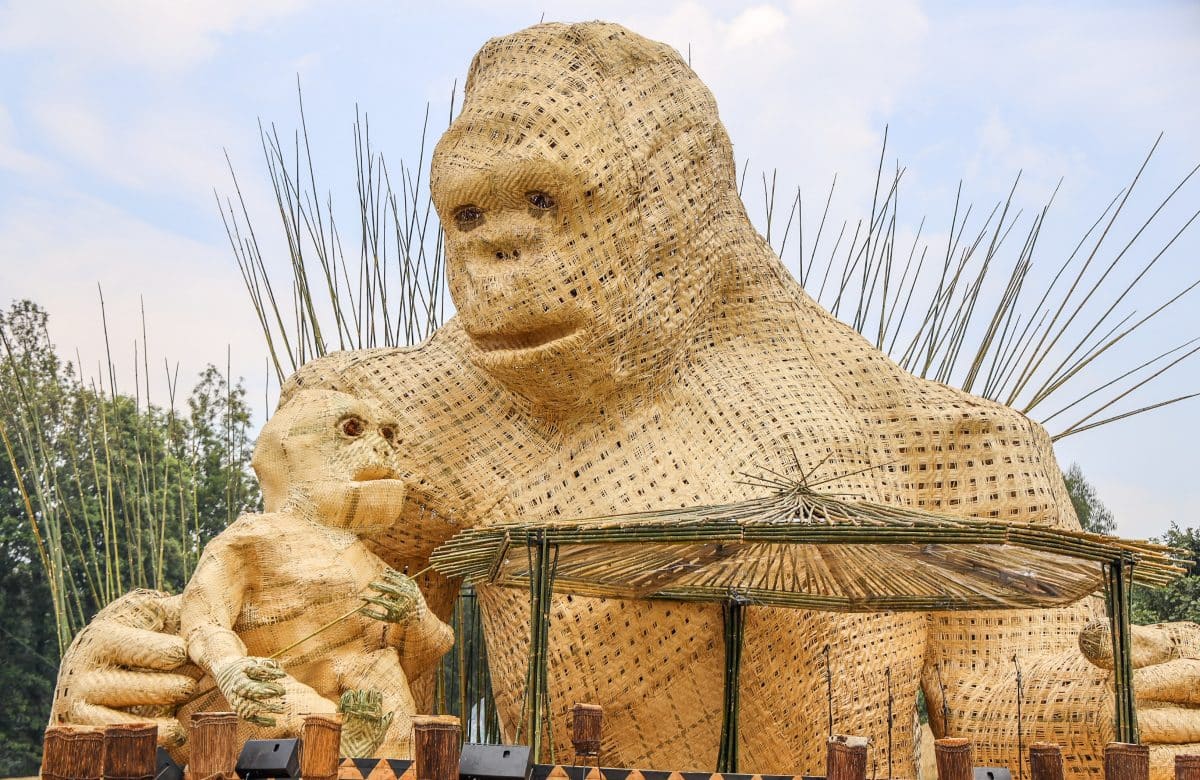
Kwita Izina! Covid-19 pandemic has also affected Rwanda’s annual naming of baby gorillas to hold virtually this year. Lavie Mutanganshuro writes from Kigaliki.

Rwanda on September 24 held its popular annual conservation event, the gorilla naming ceremony, for the 16th time.

This time, 24 baby gorillas were given names. They comprised 15 males and nine female gorillas.

Last year, 25 baby gorillas were named by conservation champions from all over the world.

Overall, more than 300 baby mountain gorillas have been named since Kwita Izina began, according to Rwanda Development Board.

This year’s Kwita Izina was held on World Gorilla Day, the day that Dian Fossey established the Karisoke Research Center in 1967.

Locally known as Kwita Izina, different from previous years, the event was for the first time held virtually via Visit Rwanda YouTube channel and the national broadcaster due to the Covid-19 pandemic that hindered air travels globally and restricted large gatherings among other preventive measures.

Normally, the event attracts big names in every industry, including conservationists, celebrities and ordinary people who, every year, ascend to Kinigi on the foothills of the Volcanoes National Park to name newborn gorillas.

This year’s baby gorilla names-givers were composed of veterinary doctors, guides, wardens, trackers and others who are all credited for their day to day involvement in the well-being of the gorillas.

They included renowned guides such as the legendary Francois Bigirimana, the most experienced guide in the Volcanoes National Park who used to work with Dian Fossey, a job he’s been doing since 1982.

In his remarks, the President of Rwanda, His Excellency Paul Kagame noted that these individuals’ dedication is reflected in the new-born gorillas.

He said: “This year will bring a special focus to the rangers, trackers, vets, guides and porters who protect our precious mountain gorillas. Their dedication is reflected in the 24 baby gorillas receiving their names today. Conservation, tourism and community development go hand in hand, each reinforces the other.”

Kagame also highlighted that the country is ready to receive guests for touristic purposes in large numbers once again, when Covid-19 is over.

“After a brief pause due to the Covid-19 pandemic, Rwanda is once again open for visitors. To everyone involved in Rwanda’s growing conservation and tourism sector, I thank you and keep up the good work,” he said.

The names of new-born gorillas: 

Amabwiriza (guidelines)

Nyiramajyambere (development)

Amarembo (gateway)

Keep it up (Nkomezamihigo)

Kazeneza (welcome)

Uwacu (one of us)

Umuyobozi (leader)

Umuganga (doctor)

Ihogoza (cute)

Izabukuru (elderhood)

Impinduka (change)

Kororoka (prolific)

Ubushobozi (capacity)

Ishya (contentment)

Ikamba (crown)

Nkerabigwi (achiever)

Indiri (habitat)

Duhuze (unifier)

Isezerano (commitment)

Murengezi (rescuer)

Umusanzu (contribution)

Arsenal stars take part in the ceremony

The remaining three baby gorillas were named by famous Arsenal players: Emerick Aubameyang, Bernd Leno, and Héctor Bellerín, thanks to the three year-deal that the government of Rwanda signed with the English Premier League team in May 2018.

The three-year partnership saw the “Visit Rwanda” logo on the left sleeve of all first team, under-23 and Arsenal Women’s team. Rwanda was the first ever shirt sleeve partner for Arsenal.

According to Rwanda Development Board, the deal whose worth remains undisclosed up to now sought to deliver long-term benefits in terms of investment and tourism more than the actual cost of investment.

While naming gorilla infants, the trio used a pre-recorded video.

Leno named his baby gorilla Myugariro (defender), whereas Aubameyang named his Igitego (goal).

“When you are the firstborn in the family, you feel a sense of responsibility. And it’s our responsibility to look after wildlife,” Bellerin said after choosing Iriza as a name for the newborn gorilla.

In his speech, President Paul Kagame highlighted that “Arsenal is a good partner in our effort to show the importance of conservation and why visiting Rwanda is such a special experience.”

Genesis of gorillas naming ceremony

Kwita Izina is an honored tradition in which Rwandan families hold a ceremony to name a newborn baby.For three decades prior to the first official gorilla naming ceremony in 2005, park rangers and researchers in Rwanda used to name mountain gorilla babies in order to keep track of each gorilla in their family and habitat.

In the early 1990s, the park became a battlefield for the country’s civil war which paralysed tourism until 1999.

In 2005, in a bid to boost conservation in the park, Rwanda introduced the annual gorilla naming ceremony, which has significantly contributed to the rise in gorilla population in the volcanoes.

Before the introduction of the custom, Volcanoes National Park, home to the endangered mountain gorillas, had experienced a number of threats largely linked to poachers.

As a result of the good practice, the number of mountain gorillas has reached a new milestone, rising from 240 to 604 in the last 30 years in Virunga Massif, according to the latest census.

Clare Akamanzi, the Chief Executive Officer of RDB, says that the increasing gorilla population in the Volcanoes National Park, in particular, is proof of the strides that Rwanda has made in gorilla conservation, attributing the success to the collaboration of conservation partners and members of the community surrounding the park.

The Virunga massif refers to an area containing a chain of 8 volcanoes that span across the three countries of Rwanda, Uganda, and D.R.Congo.

The area covers three national parks of Virunga National Park in the DR Congo, Volcano National Park in Rwanda and the Mgahinga Gorilla National Park in Uganda.Globally, the total wild gorilla population stands at over 1,000 individuals.

The economic benefits of gorillas

Last year, Rwanda welcomed more than 1.6 million visitors, among whom over 17,249 visited the majestic mountain gorillas. The park permits sold were worth $25.1 million, a 25 per cent increase compared to 2018.

Total revenues from the country’s three national parks stood at $28.9 million and Volcanoes National Park revenues contributed 91 per cent of all the parks’ revenues.

As of 2019, Rwanda had generated more than Rwf 19.4 billion from gorilla trekking.

Of this amount, according to Rwanda Development Board, over Rwf 5.2 billion was disbursed in establishing 647 community-based projects under the revenue sharing scheme initiated by the government in 2015.

The aim of the revenue sharing programme was to guide investment in the areas surrounding the various national parks in the country by ensuring the plough back of a percentage of all park revenues into the communities.

Initially, only 5 per cent of the park revenues would go to surrounding communities, but this has grown to 10 per cent.

The projects have availed clean drinking water, milk, health centres, classrooms and housing to members of the communities living around the three national parks; Akagera National Park, Nyungwe National Park, and Volcanoes National Park.

The revenues the country earned through gorilla trekking in previous years are expected to reduce sharply this year as a result of the Covid-19 pandemic that has restricted cross-border and air travel to and from some countries.

Dignitaries that has named gorillas in the past

It is worthy of note that the Kwita Izina has become a high profile annual ceremony where dignitaries are drawn from across the world of business to name gorillas every year in Rwanda. The event has in time past been honored with the presence of Graca Machel, a humanitarian and widow of two former presidents of Mozambique and South Africa; Mozambican President Samora Machel and South African President Nelson Mandela in 2018 who named a baby gorilla alongside the former President of Nigeria, Chief Olusegun Obansanjo. Richard Virgin and Naomi Campbell amongst others.

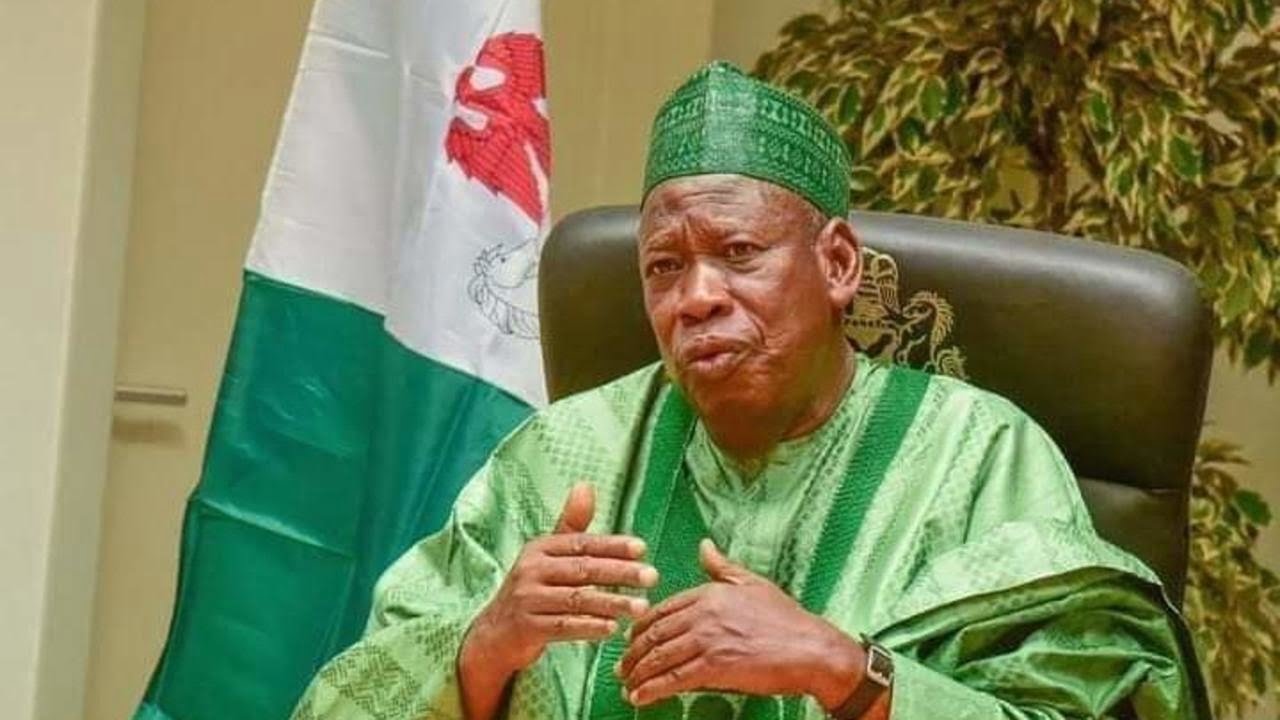
GREAT LEADERSHIP STRIDES OF GOV. GANDUJE IN KANO STATE

0
GOV. GANDUJE

Quote:

“If your actions inspire others to dream more, learn more, do more and become more, you are a leader.”

– John Quincy Adams

Within the complex leadership matrix in Nigeria, it takes uncommon vision, courage, character, commitment, candour, compassion and the passion to serve the people selflessly for one to succeed. Like a race across the curves and contours characterized by the competing needs of pulling the people from the ignoble pit of poverty, ignorance and several debilitating diseases, the starting point is to wear the people’s shoes and understand precisely where they pinch them.

The next step of course, is for such a leader to stoop down in humility, listen to the crying needs of the led majority and rise with the people to conquer, against all odds.  As Theodore Hesburgh puts it:  “The very essence of leadership is that you have to have vision. You can’t blow an uncertain trumpet.”

Having all these at the back of his mind is the current governor of Kano State, Dr. Abdullahi Umar Ganduje OFR, elected in 2015 on the platform of All Progressives Congress Party(APC). For a state which was created on May 27, 1967, when it was carved from the then Northern Nigeria by the Federal military government under General Yakubu Gowon and having experienced variegated performance over the decades, Ganduje knew from the outset that there was much to be done to leave a lasting legacy worthy of emulation by generations yet unborn.

Beginning with the first military police commissioner, Audu Bako, credited with building a solid foundation for the progress of a modern society and the first civilian governor AbubakarRimi(of blessed memory), the onus lay on Ganduje’s shoulders to roll up his sleeves and walk the talk in effective leadership. And that is precisely what his administration has achieved in significant areas such as infrastructural development, security, youth empowerment, transportation, education/ human capital development and health care delivery. But the challenges are there.

For instance, one in every five of the world’s out-of-school children is in Nigeria and Kano leads the pack. A total number of 1,496,736 children are currently not enrolled in schools in Kano State, the United Nations Children Fund, UNICEF, has said. What more, for a state ranked as the most populous in Nigeria, with figures at 9,401,288 (according to the 2006 census) and estimated at 11,058,300 in 2011, giving the people a sense of belonging was not going to be an easy task. Kano State also happens to be the second-largest industrial centre after Lagos state in Nigeria and the largest in the northern part of the country. It boasts textile dyeing, tanning, footwear, cosmetics, plastics, enamelware, pharmaceuticals, ceramics, furniture, automobile and other industries as witnessed by CherryAfrica team during a tour of the ancient city in company of the Ministry of

It is pertinent for the records to mention some of his remarkable achievements from May 2015 to November 2018, and the other notable ones since he came back for the Second Term in 2019. The driving policies of the government are predicated on continuation, consolidation, fine-tuning of ongoing critical infrastructural projects embarked upon by the previous administrations and to further initiate more people- oriented policies and programs for the overall development of Kano state. Since then, the administration remained resolute and committed in fulfilling the pledges it made.

At inception of the administration in 2015, it adopted the Medium Term Sector Strategy (MTSS) and the Medium Term Expenditure Framework (MTEF) to guide the administration’s development machinery. These policies ensured that policy formulation, development planning, programme implementation, monitoring and evaluation are all tailored towards achieving value for every kobo expended by government. It has, through these strategies, met the needs of majority of the citizenry irrespective of wherever they are domiciled.

Sector-based projects:

INFRASTRUCTURE

Government’s efforts in this critical sector are focused on boosting a wide spectrum of the people’s needs.  Strong, solid and stable infrastructure definitely act as catalysts to drive sustainable economic development. That is especially so in areas such as road network, education, health care delivery, security, welfare and the social sector including religion.

The completion of various ongoing construction works, as well as rehabilitation of bridges across the state are well taken care of.  These include minor and major works such as Constituency Projects and completion of age-long abandoned projects.

Specifically, the construction of the Golden Jubilee Monument at Lodge Road Roundabout by Government House, that of Katsina Road Underpass at Dala Local Government and that of Janguza Barracks -TasharBala – Fantasha – Gangare Road Tofa Local Government all come to mind.

Not left out are the construction of D/Tofa – Dungurawa Road, D/Tofa Local Government,  that of reinforced concrete drainage at Adakawa -‘Yantandu – Limanchi – Karofin Gangamau – Kabuwaya – Zaitawa – Bakin Zuwo – Yan Mota, Dala LGA and the reconstruction of Gwarmai – Kofa – Bebeji Road, Bebeji Local Government . There are others such as   the construction of road from Darki Market – Darki Town – Achika, Wudil Local Government, that of the  Kwarin Gogau-Jakara channelization and road Dala/ KMC/Fagge Local Governments  and the construction of Gwarzo – Tsaure – Tsanyawa Road Gwarzo/ Tsanyawa Local Governments.

All these are in addition to the renovation of the village head palace at Rurum, Rano Local Government, that at the office complex at Kano State Sports Commission Club Road and the construction of prototype police station at Rurum, Rano Local Government. The new contract awarded for the construction of Light Rail in Kano metropolis is also worthy of note.

Under the WORKS AND INFRASTRUCTURE DEVELOPMENT remarkable progress has been recorded with the construction of the Dangi Interchange, Underpass, Overpass and Flyover; the Murtala Muhammad Specialist Hospital Interchange and the Kofar Mata – Singer Market Flyover Bridge.

Not left out are the construction of Kano Appeal Court (Kano Area), the Ceremonial Court at Audu Bako Secretariat and the completion of Independent Power Project at Tiga, which is expected for commissioning before the end of this year. All thesefall in tandem with Steve Jobs’ thought that: “Innovation distinguishes between a leader and a follower.”

TIME TO REJIG FOR RESURGENCE

0
Ada Palm

Imo State Government looks inward to reawaken its sleeping asset, Adapalm, in a strategic move necessitated by the need to create jobs and boost revenue. Ogama Melford reports

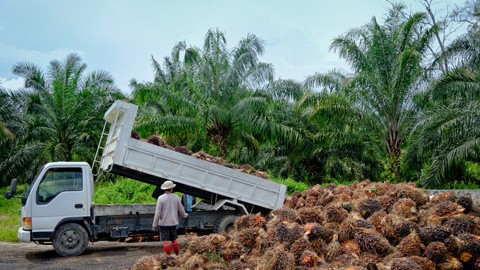
In response to pressure arising from Covid-19 lockdown and sundry factors that have left economies worse off, Imo State Government is reviewing, strategizing and relaunching the state’s revenue generating mechanisms and processes to reboot its multi-million naira Adapalm oil palm plantation and processing plant in Ohaji/Egbema local government area, South-Eastern Nigeria. The investment regarded as one of the outstanding projects established in 1983 by the administration of Samuel Onunaka Mbakwe, a lawyer and first civilian Governor of the state had almost paled into historical archives but is now being rejuvenated to raise the state’s internally generated revenue (IGR).

Adapalm Mills Nigeria Limited was established as an offshoot of the Agricultural Farm Settlements by the first Premier of then Eastern Nigeria, Dr Michael Okpara, to support various administrations of the region and make a success of the scheme. The mill and its plantation located in Ohaji area of the LGA and patterned after Israel’s famous Kibutz farm settlement employed more than 800 and made annual sales estimated more than one billion naira at inception.

Before this effort to resuscitate the project, Adapalm had already paled into such insignificant level that it was perceived as a complete shadow that betrayed the founder’s dreams. Regrettably, it became an abode for hoodlums, rodents, and reptiles, abandoned by the state and Roche Group, the Irish company that took over its management.  CherryAfrica learnt that this level of decadence deterioration stemmed from negligence by successive administrations in the state that paid only lip service to reversing the deterioration of the plant.

The company was renamed Imo Palm Plantation by Rochas Okorocha’s administration when he also attempted like others before his to bring the company back to life.

These, however, add up to anything until Emeka Ihedioha initiated the resurgence in his days as Governor before the Supreme Court judgment that turned the table against him. That move saw the Special Adviser to the Central Bank of Nigeria (CBN) Governor on Development Finance, Tony Ifechukwu, and Michael Ananabiet, Head, Development Finance Office visiting the plant for the examination of physical facilities at the project sight. Prince Eze Ugochukwu, then Senior Special Assistant to Ihedioha on Public Enlightenment, stated that the Mill was expected to benefit from CBN’s Anchor Borrowers Fund targeted at growing the agricultural sector.

Imo State Governor, Senator Hope Uzodinma, is further fuelling the revival at Adapalm. To keep the project on track and propel it to higher pedestal, he has appointed Goddy Esom Obodo, a former legislator and Commissioner for Commerce and Industry as General Manager and Chief Executive Officer since May, to steer the affairs of the company and drive the initiative. While the latest initiative aims to create a palm plantation hub and a value chain for the products of the mill, there is also a plan not only to position Adapalm as the nucleus of palm oil processing in the south eastern Nigeria, but also to equip it as a centre of excellence and a base to groom smallholder palm owners and teach them production management in palm oil processing.

Expectations are high that Obodo, an indigene of Amafor in Ohaji/Egbema LGA, who took over from retired General Austin Kalu Egwuagu-led Interim Management Committee (IMC) earlier constituted by Governor Uzodinma works assiduously to quickly return Adapalm to the status of a thriving concern on the path of profitability in sync with the government’s battle cry of reconstruction, rehabilitation and recovery. Though the third Ohaji man at the helm of affairs at the expansive mill, he is the first landlord to manage the mill, and knows the responsibilities that goes with this.

’’This is the first time a core landlord is superintending the affairs of Adapalm since its establishment and everything would be done to stabilise the huge investment,” Obodo told CherryAfrica. This objective recently laid the government under necessity to partner with the Central Bank of Nigeria (CBN) and Bank of Agriculture (BOA). The partnership is aimed to facilitate a N52 billion loan part of which would be channelled to get the machines at the processing plant back to life. It was gathered that a team made of the representatives of the two apex institutions visited the state not long ago for on-the-spot assessment of the plantation and plant.

WHAT WENT WRONG?

Obodo said: “What went wrong was that at a stage after about 5-9 years, as usual with Nigerians, our people felt the experts should go that there should be indigenisation and we can now manage it ourselves. They  started fighting the expatriates, and they left. It was then handed over to our people who took over when the mill was at its peak of production. In our usual way, we like to eat; we don’t like to produce. Unfortunately, that’s the mentality of some of our people. The mill at that time operated at its fullest capacity and the money was everywhere. People were making merry forgetting the fact that today will come and that this thing has a lifespan and that when its at its peak we need to prepare for the ageing period when it is young and have some arrangement for investment system. But it went that way till the politicians came over and decided to use it as compensatory ground for political office holders. When they come, if they win elections, those who supported the winner would be made board members and they come here and continue to share the proceeds without thinking of how they will grow this place. Of course, if a machine that has 10 years lifespan is used for 8 years you know that its almost gone. So, deterioration started setting in until the last government gave final death sentence to it. That was during Rochas administration. At that time he came and discovered that ADA palm was established by Eastern Nigerian Government and there were some monies owed that were supposed to be paid back. The repayment was not as expected but was going at snail speed so when he came, he didn’t want to pay or do anything, so he had to change the name from ADA palm to Imo Palm, so that the ownership is changed. By so doing the people that loaned money to ADA palm won’t have the authority to ask Imo Palm to repay.”

According to analysts, the move by the state government is in the right direction, citing the fact that Palm oil remains the second most traded vegetable oil in the world after soy. Palm oil is also the most productive vegetable oil with capacity to produce about ten times more oil than its nearest competitor soybean. There is equally a surge in demand for its use in biofuel and electricity production. Even as it is copiously used in manufactured food products, it is also an important ingredient in cosmetic/healthcare products and today found in more than 50 per cent of packed supermarket products.

Requirements by the European Union that 20 per cent of all energy used and 10 per cent of all transport fuel will come from renewable sources by 2020, will most likely increase this further and see global demand for palm oil growing steadily in the foreseeable future, according to industry experts. This development conforms with forecasts by the World Bank that it will take an additional 6.3 million ha of palm plantations to meet global demand by 2020.

According to M. Shahbandeh, a research expert covering agriculture and fast-moving consumer goods (FMCG), the global production of palm oil decreased from approximately 74.02 million metric tons in 2018/2019 to about 72.27 million metric tons in the market year 2019/2020.

The desire to glean from the benefits accruing from this is the strong reason Nigeria is strategizing to overtake Thailand and Colombia and emerge as the third largest palm oil producer after Indonesia and Malaysia. In that period, Indonesia and Malaysia were the leading exporters of palm oil worldwide.

Worldwide, the import volume of palm oil has reportedly increased over the recent years. Import volume of palm oil has increased worldwide over the past few years. In 2017, according to the World Bank, the average price for palm oil was $649 per metric ton. It was $639 in 2018. This, the Bretton Woods institution says, is expected to rise to around $744 per metric ton by 2025.

This explains the CBN’s interest in transforming the milling section of Adapalm Nigeria Limited to increase capacity and take not only palm nuts from its plantation, but also from smaller farms. The idea is to enable small farmers process their nuts at the mill and get optimal value, instead of selling raw nuts. With this, analysts gathered that the products and derivatives such as palm oil, cake, palm kernel, palm kernel oil (PKO), fibre, shells, and sludge, for instance, can serve as raw materials for other industries.

Palm oil industry worldwide statistics published by Shahbandeh in March indicates that worldwide production has increased in volume in recent years, with the largest producer, Indonesia, producing a record 48.3 million metric tons in 2020. Indonesia and Malaysia took advantage of the lush opportunities in the global palm oil market to ship out a total in excess of 48 million of the 53 million metric tons exported in 2019/2020. In 2018, the value of imports by India alone was about $7 billion.

“Within the United States, the estimated value of the palm oil market has steadily risen since 2015 and is expected to grow through 2022. In 2004, just under 770 million pounds of palm oil was imported into the United States. Most of the palm oil sold on the U.S. market is edible oil used in processed food,” he said.

On March 19, the Governor of the Central Bank of Nigeria (CBN) informed a gathering of the Governors of the 11 palm oil producing states in the south east and south south regions and other top officials of the government that the apex bank had commenced partnership initiatives aimed to revive the sector in the regions and enhance their contribution to the effort by the federal government to return the country to the league of leading world producers of palm oil, and insulate the economy from the shocks of crude oil prices in the global market.

The strategic meeting, it was gathered, aimed to craft a partnership model that sufficiently stimulate investments in the palm oil plantations to double the country’s palm oil production within the next five years. It was also aimed to evolve ways to reduce the country’s dependence on crude oil, diversify the productive base of the economy, conserve foreign exchange and create jobs through palm oil-related projects.

While the CBN Governor says Nigeria has the capacity to generate $10 billion annually going by the current international market price of $600 per ton and an estimated production of 16 million tons if it did not backslide from practising improved cultivation of palm oil, it is on record that the country still spends about $500 million on palm oil importation yearly, even with the product prominent among the 43 items on foreign exchange exclusion list compiled by the apex bank. This narrative is what the government wants to change without further delay.

Obodo said: “Adapalm Nigeria Limited Ohaji was established in 1974 as an offshoot of Ohaji Farm settlement established in 1963 by Dr Michael I. Okpara. It sits on an area of land measuring 4,310 hectares donated by the people of Ohaji, Egbema and Agwa. Since its inception till date this is the first time a core landowner in the person of Dr. Goddy Esom Obodo has been appointed to head this multibillion agro industry owned by the Imo State government.

“Today the establishment which was created to contribute to the overall development of Imo State in the areas of employment of youths, development of the rural areas, especially it’s catchment rural communities, growth of internally generated revenue of the state and introduction of modern agro-machines and methods to Imo farmers is now a shadow of itself due to neglect by past administrations and poor handling by past Managements.

One is therefore not surprised that the development-hungry and agriculture- friendly governor of Imo State Senator Hope Uzodinma appointed a seasoned administrator and vocational agriculturist Dr. Esom Obodo to lead the establishment back to the dream of its founding fathers.

“Today Adapalm is bouncing back; its palm processing mill is now functioning fully, security of the plantation and the entire estate is returned through a rebranded security outfit, workers are being retuned for greater performance while efforts are in top gear to link it back to the international community for technology advancement. We salute the courage of the Governor of Imo State, Uzodinma, for his avowed decision to bring Adapalm back to its lost glory using this vibrant hard-working son of Ohaji as the point man. Adapalm when fully rehabilitated is capable of employing more than 30,000 workers directly or indirectly and contribute to the revenue base of the state to the tune of about N5billion annually.”

The Greatest Tribute to Victims of 1929 Women’s Riot

0
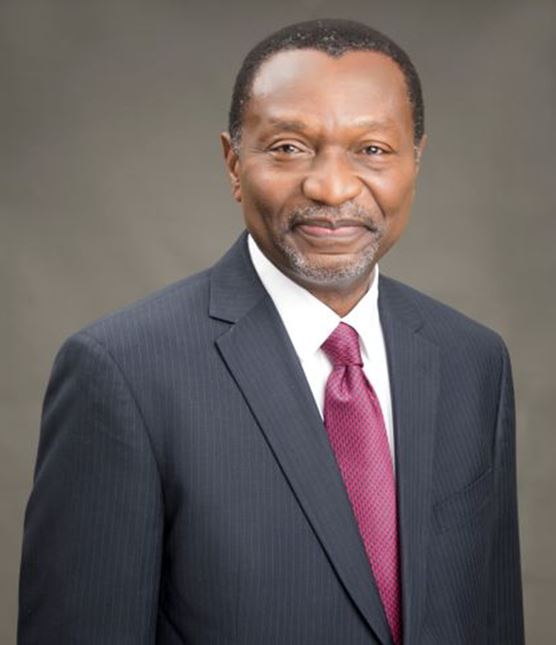
Senator Udoma Udo Udoma

1929 in Nigeria’s sociopolitical history is best remembered for the Women’s Riot over obnoxious taxation imposed by mercantilist and insatiable Colonial Masters of the day. Madam Adiaha Edem Udo Udoma, mother to late Justice Egbert Udo Udoma, was shot dead while seeking and demanding for equity.  In this deep, explorative interview with Carolyn Isaac, the progeny and son of the great Udoma consanguinity, Senator Udoma Udo Udoma recommed conscious perpetuation of landmarks that defined his grandmother in contemporary discourse of the place of women in nation building and gender emancipation as the greatest tribute amongst other sundry issues.

Over time you have sustained the ideals and values of your father (late Justice Egbert Udo Udoma, the first African Black Chief Justice of Uganda). How is life after public service?

Until the end of one’s life, one is still always available for public service. Public service in our family is a lifetime commitment because we have different phases of it. The way I was brought up by my late father was that for any person, whatever you do in life, unless you also have served the public or done something for the public, your life is not complete. Though, he always believed you should make your money, make your income and your career in the private sector. Generate income not from the public sector but you should devote your time and service for the public sector that was how we were brought up.

Given the role of your grandmother during the 1929 Women Riot, what would you still recall?

Well, the riot was in 1929 and I was born in 1934. So, clearly, I do not have any recollection. However, while growing up, my father told the story of how our grandmother was someone who believed in justice and equity and who was an organizer, a successful trader. She was quite well off but in spite of that she always felt it was not enough to be comfortable. You must look out for others and you must stand up for what is right and so she led the women uprising as it were against unfair imposition of taxes and in the course of that she unfortunately lost her life and my father who was then about 12 years old had to be withdrawn from school to identify his mother’s corpse, you can imagine how traumatic that must have been for a child of that age whose mother said goodbye when he left for school with a promise of returning after the meeting with the district officer only to find his mother in the midst of other corpses.

That was quite agonizing for his age, the sight of his mother’s corpse must have laid the foundation that later shaped him for the future?

Sure, that sight left an indelible mark on him and it was part of the inspiration that led him when he came back from studies after he became a lawyer. He committed himself to public service, to his people and was very active in the Ibibio Union for a very long time and he also went into politics fighting for the right of the people and so he wanted the Calabar / Ogoja state to be created to protect the minority of the East. So that was what he stood for and it was that sense of public service that made him accept to serve in the judiciary. It was a major reduction in his income to accept judicial service which he had refused for quite sometimes but in the end, he felt that this was another way he could serve the public and so he accepted to be Judge and he accepted also to be the first African Chief Justice of Uganda. It was that commitment to public service that he had.

As one of the living sources of the massacre, can you help authenticate where the event really occurred and figures in view of what appears to be contending opinions?

Well, I know there was women riot in Aba and there was women riot in the then Opobo, what I can’t tell is whether the one in Aba registered as much fatalities as was recorded in Opobo, Ikot Abasi where my grandmother was killed, but both places had women rioting unfair taxes imposed on the women by the then Colonial Masters.

In your days as a Senator, what efforts did you make towards getting the British government to honor the victims of 1929 Women Riot of which your grandmother was one given your relationship?

As a family, we don’t like advertising our own achievements. We believe that is for others to do and we don’t believe in self-glorification which is why you never saw my late father going on to advertise what his mother did but others. My father believed that you should commit yourself to public service and that when you do that it is for others to assess the impact of what you have done not for you to indulge in self-glorification. So, you will never see our family promoting ourselves, all the attention that was given was the work of others who saw the good in our family and others promoted it.

Should Nigeria demand reparation from the British government for the killing of unarmed innocent women during the uprising, would you be willing to lend your voice?

Well, I don’t look at things that way. We should move on. We have our freedom now. Let us enjoy it and use it wisely. Let us recognize the people who helped to get us where we are today. Let us recognize the sacrifices of people like my grandmother and other women who lost their lives in that 1929 women riot in Ikot Abasi and later on of the various people who fought to get us here and, in that recognition, we should cherish Nigeria and make it work well as we grow. That, to me would be the best tribute to all those people who fought to get us independence. The greatest tribute will be how well we manage the Nigeria of today and our contributions to Nigeria.

Can you proudly say we still have women of your late grandmother’s vision and bravery in Nigeria today?

Well, I think it is for you to assess. What I would say is that her story is a good example for people and indeed African women to emulate and that each of us in our own way can do things to contribute to public growth of Nigeria.

Let’s digress a little, you had one of the biggest law firms in Nigeria and like your father, you were very successful in your law practice when you contested elections for a senatorial seat. What was the attraction in politics to become a Senator?

Yes, I had and still have a very successful law firm in Nigeria, very successful. I decided to take time off from that practice to run for the senate as a means of making a contribution and part of what drove me was that the battle my father and grandmother fought was still not won because under the Nigeria we found ourselves, those of us from that part were not given full recognition in terms of the revenues that came from there. We were not given enough derivation due us so this was a continuation of the fight because it never finishes. For my grandmother’s generation, it was fight against unfair imposition of taxes by the colonial masters. In my father’s generation, it was a fight for independence as well as ensuring that states were created in Nigeria so that each group is as near as possible and should have an area in which they are not marginalized. So, they fought for Calabar/Ogoja states and in the end, they got it. So, what is today known as Akwa Ibom State, Cross River State, Rivers State and Bayelsa State all came from the Calabar / Ogoja movement which my father championed. Ultimately, his dreams came through for my father. In my time, those states having been created we now found out that revenue that were being generated, we were not getting our fair share and that became my battle and I took that battle up which was why I ran for the senate. I took that battle up for onshore/off shore dichotomy to be removed and so that was my battle and we fought it together with others because generally you cannot win a battle by yourself. Together with others we fought the battle both those from Akwa Ibom and other parts of the country in the National Assembly as well as the then Governor of the State, Arch. Obong Victor Atta. We drafted a bill, got sponsors and then persuaded the then President Olusegun Obasanjo’s government to also send a similar bill and we merged the two bills and succeeded in getting it through the National Assembly which is why Akwa Ibom State moved from getting one of the least derivations to getting one of the highest derivation. So, the resources that Akwa Ibom State is enjoying today were things that I contributed to fighting for. Every generation has its battle but the inspiration came from a tradition my grandmother fought for the public good and lost her life in that process.

That was quite remarkable in the history of your people, aside that, what would you consider your greatest achievements in public service?

 I think it’s not for me to judge or asses my achievements, it’s for people to asses it. But I can say while in the senate, the onshore/offshore dichotomy cut was one of my achievements but I also contributed to a lot of things. I led the federal government delegation of the National Assembly that went round various creditor countries to try and get debt relief for Nigeria. I led that working together with the Executive which at that time was Dr. Ngozi Okonjo-Iweala. So, we worked together. I was of the National Assembly, she in the Executive and we were reporting to the President on a daily basis. He must be given a lot of credit because it was his drive as a President but all of us contributed. Dr. Ngozi Okonjo-Iwuala the then Nigerian Minister of Finance and I as the Chief Whip of the senate and the leader of the National Assembly delegation that went on a tour trying to persuade the various creditor countries to give us debt relief. So, I was involved in achieving that for Nigeria in my time at the senate.

As the immediate past Minister of Budget and National Planning, What would you consider your most significant accomplishment?

A lot but very importantly, I helped to design and develop the economic recovery and growth plan. It was the economic recovery and growth plan that we used to get us out of recession. You know in 2016 we went into recession. As the Minister of Budget and Planning, I was responsible for that Plan and we had extensive consultations with the National Assembly, with our development partners, with various state governments, with unions and with the private sector extensively, which I led, and at the end of it developed the Economic Recovery and Growth plan. It was that Economic Recovery and Growth plan that helped get Nigeria out of recession which unfortunately we are back in due to COVID 19. At that time, it was a major achievement and very significant indeed cause up till now the government is still using it.

 Nigeria is back in recession as you rightly noted. What would you advise as the way out?

I think what we did years back that took us out of recession, some of those things can still be done today. Luckily, the current Minister of Finance Zainab Ahmed, she was my Minister of State, we worked together on it so I’m sure we should be able to draw on it in trying to get us out of this recession and the governor of Central Bank of Nigeria, Godwin Emefiele was still the governor in my time so I’m sure they have enough to draw from there to help get the country out of recession.

It’s been six decades of existence as a nation, how would you rate Nigeria given its challenges?

Sixty years is a short time for a country. In the life of a human being is a long time but for a country, it is a short time. When you look at countries like the USA, you see the challenges they also went through. I believe that we will overcome these challenges. There are things that we could have done better, no doubt about that, but I believe that even in our mistakes of which we have done many, some which led to a civil war and some which led to military take over and many others, I believe that Nigerians will learn many lessons from those mistakes and we will be able to build on them and when new problems arise, we can look back and say yes, we went through this before, how did we resolve it. So, I am optimistic about the future. I appreciate and I realize that we could have done much better than where we are. Nevertheless, I believe that because of enterprising spirits because we have so many enterprising people in this country, we have so many dynamic people in this country and I believe that that dynamism, sooner or later will be mobilized to make Nigeria a great country.

Oriental Energy Resources Appoints Mustafa Indimi as New MD

0
Mustafa Indimi

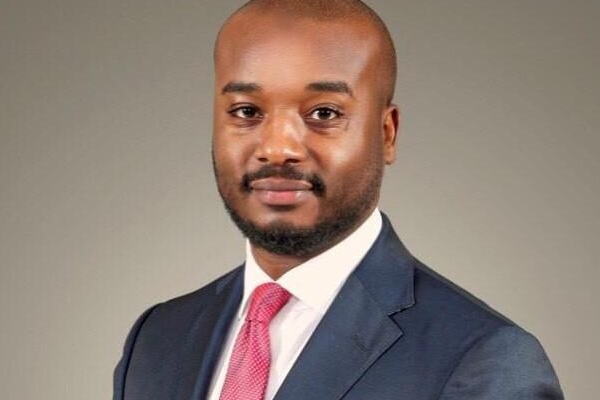
Oriental Energy Resources Limited, a leading indigenous oil exploration and production company in Nigeria has appointed Mustafa Indimi as its new Managing Director.

According to a press release on the company’s website, Mustafa is taking over from Engr. Ignatius Ifelayo who served the company meritoriously for seven years.

Ifelayo, a first class degree holder in Petroleum Engineer from the University of Ibadan had over 35 years’ experience in the Oil and Gas Industry covering on shore, off shore and deep water operations.

With personal core values of humility, integrity and respect for people, Ifelayo exceeded expectations as the Managing Director of the company as he successfully leveraged onCSR which is said to be the core element of reputation that can be used to establish trust and goodwill togainthe support of the impact communities, stakeholders and the government to ensure a smooth operation. Under his stewardship, Oriental Energy enjoyed growth in various areas of operation especially with their impact communities in Akwa Ibom State as they enjoyed a peaceful working relationship through his tenure.

Amongst projects executed in his time wereThe Ultramodern Youth Empowerment Center which has long provided jobs for over 100 youths in MBO community in Akwa Ibom State. Fully equipped WAEC standard Science Laboratory consisting of Biology, Physic and Chemistry labs providing practical science-based knowledge to the community and its environs. Annual scholarship program from inception to over 1,000 indigenes of the statein tertiary institutions across Nigeria, Women empowerment programs and medical outreaches to mention a few.

Today, Oriental Energy Resources stands out in Akwa Ibom State as a pace setter amongst its contemporariesin CSR. AsIfelayo bows out of Oriental Energy, it is worthy of note that he made it a great place to work and he leaves Oriental Energy well positioned for the next phase as Nigeria transition to cleaner energy in line with the Federal government’s declaration of  2021-2030 as “The Decade of Gas”

Mustafa,who began work as a Planning Engineer in the year of Ebok’s first oil and his undergraduate studies focused on economic evaluation and investment decision methods at the Colorado School of Mines, was promoted project manager in 2013 with oversight of Ebok field.

Prior to the new appointment, Mustafa was the Executive Director (Technical) and a member of the company’s Board of Directors. He brings with him an in-depth knowledge of the business and he is well-positioned to drive the company forward.

A master’s degree holder in Petroleum Production Engineering from Robert Gordon University Aberdeen, Mustafa has an impressive track record of leading teams to deliver outstanding performance and results.

On his appointment, Mustafa said: “It is an exceptional privilege to be appointed as Managing Director at a time that provides great opportunity to take the company to new heights. I am looking forward to working with the Board, Management and Staff to strengthen and grow the company by building on the solid foundation to generate significant value for all stakeholders.

“Underpinning everything is my commitment to the company’s vision to set the standards that all other E&P companies in the Nigerian oil and gas industry will be compared against.’’

Oriental Energy Resources Limited is an indigenous oil exploration and production company founded in 1990 by Alhaji (DR) Muhammadu Indimi, OFR. It started with a modest Block OPL224 offshore Nigeria, and has now expanded to include three assets under development offshore Nigeria, the Ebok Field (OML 67), Okwok Field (OML 67) and OML 115. The Ebok Field began production in Q2, 2011 while the Okwok Field began production in 2015.Oriental Energy has also developed an offshore production hub centered on the established Ebok Terminal which is used for the storage and offloading of crude oil.

Twitter Begins Testing Downvotes Option On Its Platform

0

Global microblogging platform, Twitter has introduced a ‘dislike’ option on the application which will allow users to show their negative reactions to tweets. 

According to a post by Twitter Support, the feature will only be available to iOS systems.


Twitter noted that iOS users will now see new up-vote and down-vote options below a tweet.

The tweet from the support team read, “Some of you on iOS may see different options to up or down vote on replies 

“We’re testing this to understand the types of replies you find relevant in a convo, so we can work on ways to show more of them. Your downvotes aren’t public, while your upvotes will be shown as likes.”

It further tweeted, “Some key notes about this experiment: 1. This is just a test for research right now.
2. This is not a dislike button.
3. Your downvotes are visible to you only.
4. Votes won’t change the order of replies.”

Despite creating the downvote button, Twitter clarified that the number of dislikes on a tweet can only be seen by the author of the tweet unlike YouTube and other social media platforms.

This, it said, will help the author to understand the types of replies relevant in a conversation.

The American blogging platform has been evolving slowly since its creation. Last year, Twitter made a feature that allows users to limit comments by setting who can reply: it could be everyone, people they follow, or people they mention. 

It also introduced a story section (fleets) on the top of the app that allows people to post their daily life on the platform just like Facebook. 

The platform was banned on June 5 by President Muhammadu Buhari-led Nigerian government for allegedly threatening its corporate existence. 

The ban came after Twitter deleted a tweet by Buhari which was considered to be distasteful by many Nigerians, some of who complained to the platform. 

Like Twitter, Toyota Snubs Nigeria, Opens Assembly Plant In Ghana

0

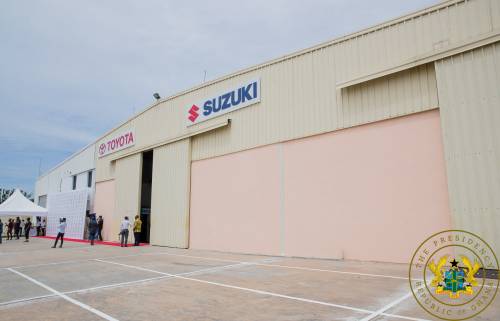
Toyota, a Japanese multinational automotive manufacturer, has opened a second assembly plant in Ghana, snubbing Nigeria, which has the biggest economy in West Africa. 

This comes less than three months after the American microblogging giant platform, Twitter also snubbed Nigeria for Ghana.


The launch of a Toyota assembly plant in Ghana, the second auto assembly plant in the country in less than a year, will help reduce imports of secondhand vehicles and boost export earnings, Ghanaian President, Nana Akufo-Addo, said on Tuesday.

The assembly unit, a $7 million investment with annual production capacity of around 1,330 units, follows the launch by Volkswagen of a 5,000 unit per year capacity assembly facility in August 2020.

The plants are the result of global automakers such as VW, Nissan, Toyota, Honda and Peugeot waking up to the potential of the African market, traditionally dominated by used-car sales, according to Reuters. 

At the launch, Akuffo-Addo said Ghana aims to boost its auto sector and attract automakers with generous fiscal incentives to assemble and produce cars in the country

“The use of foreign exchange to import cars in Ghana will be reduced, at the same time, the export of made in Ghana cars to other African markets will earn our nation much needed foreign exchange,” Akuffo-Addo said. 

The plant will assemble Toyota Hilux pick-ups and other sedans by the Toyota Tsusho Manufacturing Company Limited. 

Twitter in April announced plans to set an African office in Ghana. The development was revealed by its CEO Jack Dorsey, via a tweet.

“Twitter is now present on the continent. Thank you, Ghana and Nana Akufo-Addo,” he said.

According to NOI polls, 39.6 million Nigerians have a Twitter account, which is more than the entire 32 million population of Ghana.

Many Nigerians have blamed the poor management of Nigeria’s economy, abysmal human rights record and attack on media and free speech by the President Muhammadu Buhari-led government for the reason why the country has not been attracting as much foreign direct investment as it should judging by its size in Africa. 

And on June 5, Nigerian government officially banned Twitter after the company deleted a comment posted by Buhari on the platform, which many Nigerians found distasteful. 

UK Moves To Check Google, Apple’s Dominance Of Mobile Phone Systems

0

Britain’s competition watchdog said it would investigate whether Apple (AAPL.O) and Google’s (GOOGL.O) dominance of mobile phone operating systems, app stores and web browsers hurt consumers, launching its latest probe into the tech giants.

Reuters reports that the Competition and Markets Authority said it would undertake a “market study” into the matter to see whether the pair’s effective duopoly was stifling competition and ripping off consumers, or hurting businesses like app developers.


Governments around the world are looking at strengthening the regulation of US tech giants that have become even more powerful during the COVID-19 pandemic, and there are multiple investigations globally into their market positions including in the United States and the European Union.

Britain is setting up a dedicated unit within the CMA to keep the tech giants in check and encourage digital competition but said it needed to start work probing iPhone maker Apple and the Google-powered Android system as soon as possible.

“Our ongoing work into big tech has already uncovered some worrying trends and we know consumers and businesses could be harmed if they go unchecked,” CMA chief executive Andrea Coscelli said in a statement on Tuesday.

The CMA said the new study into mobile ecosystems would be broader than some of the other competition probes it already has into Apple’s App Store and Google’s Privacy Sandbox.

Last year, the CMA concluded an investigation into digital advertising, concluding that Google and Facebook have developed unassailable market positions, with the two accounting for nearly 80% of UK’s digital advertising spend. It recommended regulatory changes as a result.